Shehersaaz Strengthens Climate Action Through “Integrated Rainwater Harvesting System” at NUST

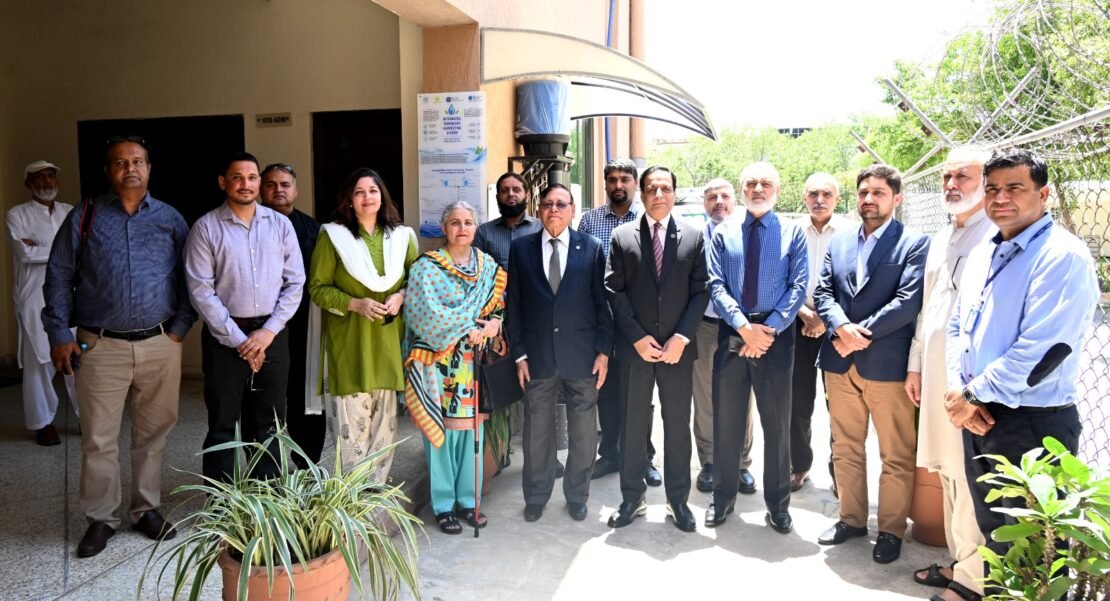
The new “Integrated Rainwater Harvesting Unit” at the NUST School of Civil and Environmental Engineering (SCEE), Islamabad, opened on June 8,2026, marked by a special ribbon cutting ceremony by NUST, Shehersaaz and UN-Habitat. Reinforcing its commitment to advancing climate-resilient and sustainable educational infrastructure across Pakistan, the initiative is implemented under PROGRESSIVE (Program for Safe, Inclusive, Resilient and Sustainable Educational Places for All), a flagship long-term program of Shehersaaz dedicated to integrating climate adaptation into public and educational spaces.

The inauguration was graced by Dr. Mohammad Irfan, Principal & Dean of SCEE, NUST, Mr. Jawed Ali Khan, Senior Advisor/Country Programme Manager, UN-Habitat and Ms. Almas Shakoor, Executive Director of Shehersaaz, along with distinguished representatives from UN-Habitat, Shehersaaz, and the faculty of SCEE NUST.

Designed to capture and utilize rainwater efficiently, the system will directly benefit over 1,000 students and faculty members, reducing dependence on conventional water sources and promoting sustainable water resource management. Beyond its operational value, the installation serves as a practical learning model for students, researchers, and future engineers, demonstrating real-world applications of climate-smart infrastructure.

According to NUST 80% students are using the facility and benefiting from it.

The project is part of the broader PUCCAR Project for Urban Climate Change Adaptation and Resilience, implemented by Shehersaaz in partnership with UN-Habitat and supported financially by the Adaptation Fund, highlighting the strength of global-local collaboration in addressing urban climate challenges.

During the event, NUST leadership appreciated Shehersaaz’s impactful intervention and expressed interest in expanding similar sustainability initiatives, recognizing the importance of scaling climate-resilient infrastructure in academic institutions.
Through visionary leadership and consistent delivery of innovative solutions, Shehersaaz continues to position itself as a leading force in climate adaptation, urban resilience, and sustainable development in Pakistan, transforming environmental challenges into opportunities for long-term impact and community benefit.
Shehersaaz and NUST’s SCEE Forge Strategic Partnership for Urban Development


NUST and Shehersaaz Sign MOU to Address Urban Challenges


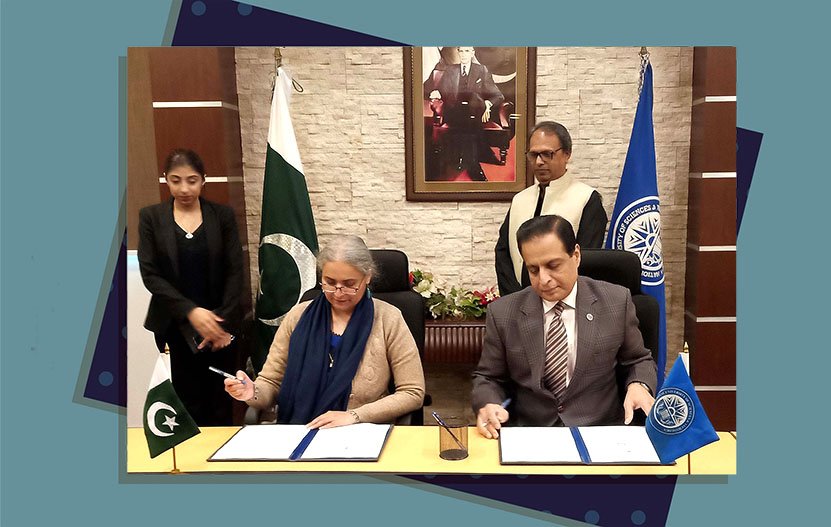
In a significant development on November 29, 2023, Shehersaaz and the School of Civil and Environmental Engineering (SCEE) at NUST, Islamabad, came together for a momentous Memorandum of Understanding (MOU) signing ceremony. The ceremony, held at NUST, marked the initiation of a collaborative journey aimed at addressing crucial urban development challenges.

The MOU, crafted with mutually agreed objectives, assignments, and tasks, reflects the shared commitment of both Shehersaaz and NUST's SCEE to fostering positive change. The collaborative effort aims to leverage the strengths of each party to create a meaningful impact in the realms of urban environment, transportation, urban planning, and capacity building.

The ceremony witnessed a palpable sense of positivity as representatives from both organizations gathered to solidify their commitment to long-term collaboration. The MOU envisions institutional cooperation, with an overarching goal of promoting knowledge sharing and joint efforts in tackling key urban development challenges.

By pooling resources and expertise, Shehersaaz and NUST's SCEE aim to contribute to sustainable urban development, creating solutions that address the evolving needs of urban environments. The partnership signifies a strategic alliance that seeks to explore innovative approaches, share best practices, and collectively work towards building more resilient and vibrant urban spaces.

This collaboration underscores the commitment of both parties to making a meaningful impact on the urban landscape, laying the foundation for a future marked by shared knowledge, collaboration, and positive urban development outcomes.


World Environment Day 2023 Event at NUST University Islamabad cropped

World Environment Day 2023 observed at NUST

World Environment Day marks its 50th Anniversary this year (2023) and in the 5 decades the day has grown to be one of the largest global platforms for environmental outreach. This year Theme for World Environment Day was ‘Solutions to plastic pollution”. Plastic pollution is a growing and serious concern in Pakistan as it ranked sixth globally and third in Asia among plastic waste generators with the country producing 4 million tons of plastic waste annually. Karachi is identified as among the top 10 marine litter hotspots in the region, constituting an increasing risk to ecosystem health and biodiversity. This is rooted in unsustainable production and consumption patterns, poor plastic and solid waste management and lack of infrastructure, lack of adequate legal and policy frameworks and poor enforcement, and a lack of financial resources both at national and local governments.

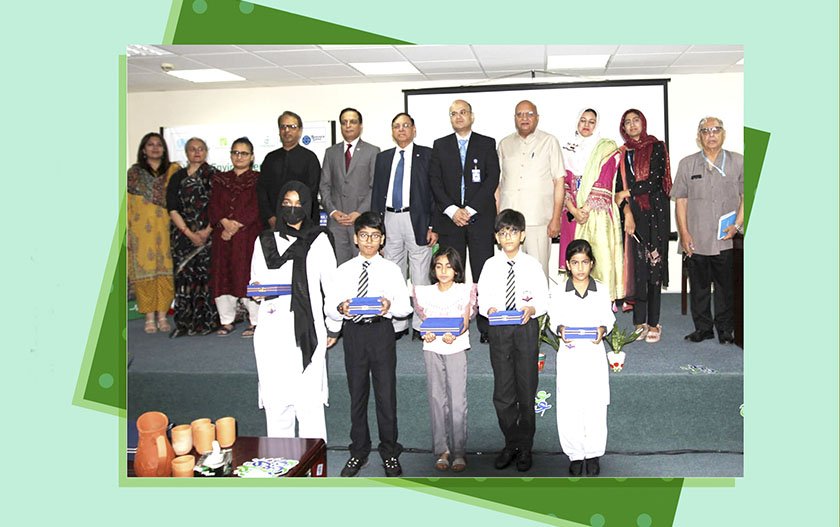
Shehersaaz in collaboration with UN-Habitat, Ministry of Climate Change and NUST celebrated World Environment day 2023 to create awareness to effectively manage the plastic waste and create a healthier society. The winners of the Art Competition held by UN Habitat on International Zero Waste Day 2023 were also announced and awarded aiming to create awareness in children and promote sustainable consumption and production patterns and contribute to the advancement of the 2030 Agenda for Sustainable Development. Dr. Muhammad Irfan. Principal & Dean. Professor. School of Civil & Environmental Engineering (SCEE) distributed the awards to the winners.

A Panel discussion was convened to dig out the challenges and to come up with the solutions to reduce and manage plastic pollution. The panelists included Mr. Jawed Ali Khan, HPM, UN Habitat; Dr. Imran Hashmi, Tenured Professor & Associate Dean, IESE, NUST; DR. Hira Amjad, Assistant Professor, IESE, NUST; Ms. Raina Saeed Khan, Chairperson, Islamabad Wildlife Management Board; Dr. Mansoor Ali; Team Lead, Waste Burning Program, Royal Academy of Engineering, UK; and Dr. Beenish Kulsoom, Lead Local Governance Program, Shehersaaz.

The panelists highlighted that that there is need for redesigning products & packaging, market assessment for reuse, refill & recyclability, increased awareness and advocacy, and effective implementation of legislations for beating plastic pollution in Pakistan. A strong need was felt for inclusion of producer responsibility in eliminating plastic pollution through defining and legislation under Corporate Social Responsibility (CSR). Through collective action, we can achieve a world that is cleaner, greener, safer, healthier and happier, for us to live, work and play.

Ms. Almas Shakoor, Executive Director, Shehersaaz welcomed the participants and highlighted the importance of awareness for an effective and efficient plastic waste management system which is critical for improving the productivity and sustainability of Pakistan centers.

Mr. Jawed Ali Khan in his opening remarks explained that UN Habitat is assisting cities through actions including waste data and monitoring, knowledge sharing, education and advocacy. As the cities grow, the problem of plastic and solid waste management is worsening. If the trend continues, 12 billion tonnes of plastic waste will be part of the environment by 2050. It is important that we work jointly towards reducing the plastic waste and promote its utilization for generating circular economy to reduce plastic pollution, value addition and increase resource efficiency.

Dr. Imran Hashmi and DR. Hira Amjad, deliberated that we must recognize that the restoration of nature is imperative to the survival of our planet and the human race. Academia is playing its role by providing the alternatives and students in the universities are doing research on different topics specifically related to Micro-Plastics. He highlighted that the research work done is not appropriately taken up by policy makers for integrating into the policies. This gap needs to be filled by working hand in hand.

Dr. Mansoor Ali described though National policies and legislations exist to address the plastic waste challenge but due to ineffective implementation, we are unable to beat the menace of plastic. There is a dire need to revise the legislations and their implementation strategies. Dr. Beenish Kulsoom said that it is important to identify the root causes for the ineffective local governance system for management of plastic waste. There exists overlapping of mandates of institutions working at the local level resulting in ineffective governance. The solution is to revisit the governance structure. Ms. Raina Saeed explained that awareness and advocacy plays a vital role in building awareness to the general public with respect to the impacts of plastic pollution in Pakistan and working for plastic free Margalla Hills Natural Park.

Citizens perspectives on challenges and solutions were also taken in which they showed concern on low awareness with respect to severity of the impact caused by plastic pollution on the wellbeing. Gardeners, Sanitary Workers and Forest Guards were payed tribute for their continuous efforts to clean the environment.