World Habitat Day 2025: Building Urban Solutions to the Climate Crisis
Islamabad, October 6, 2025
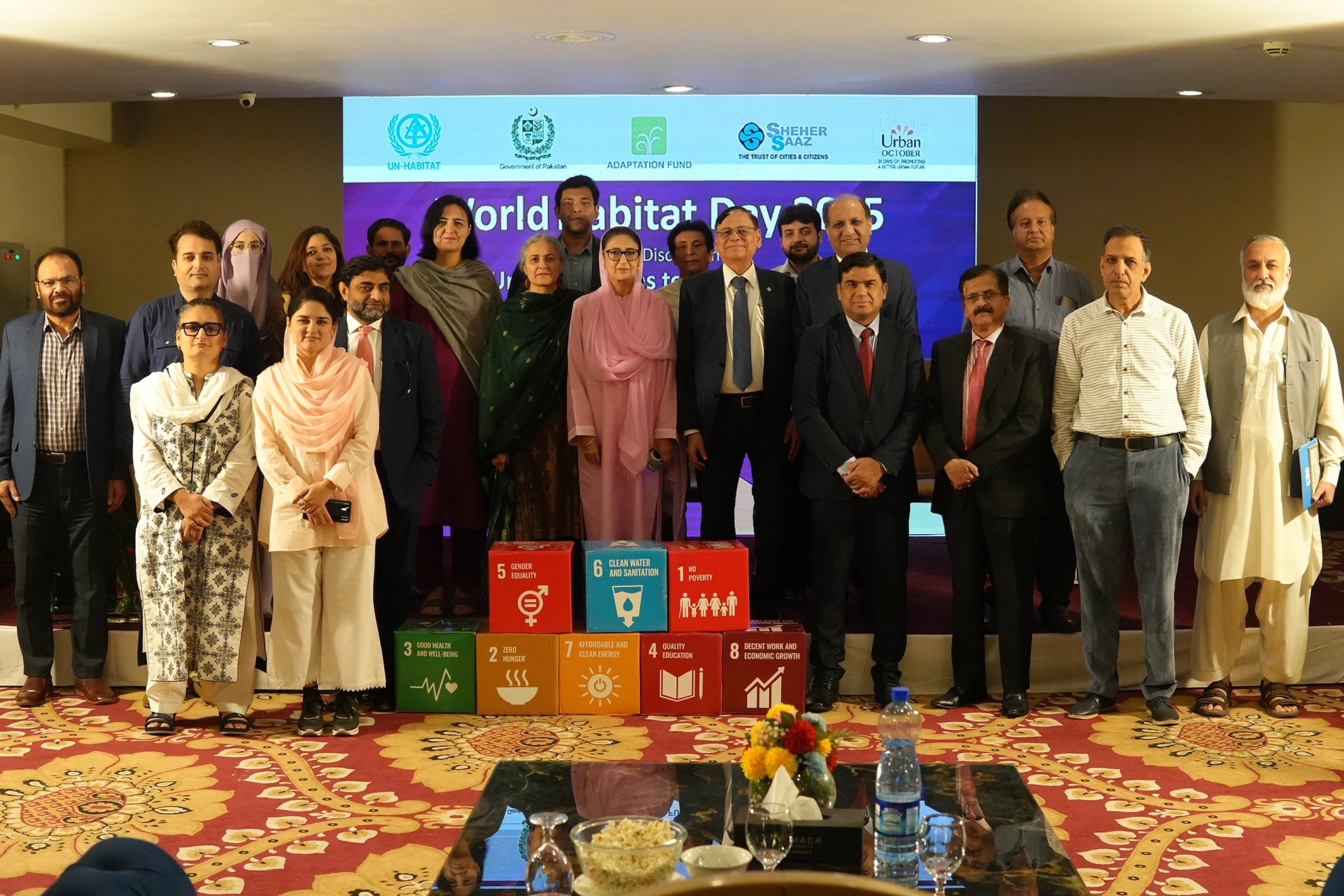
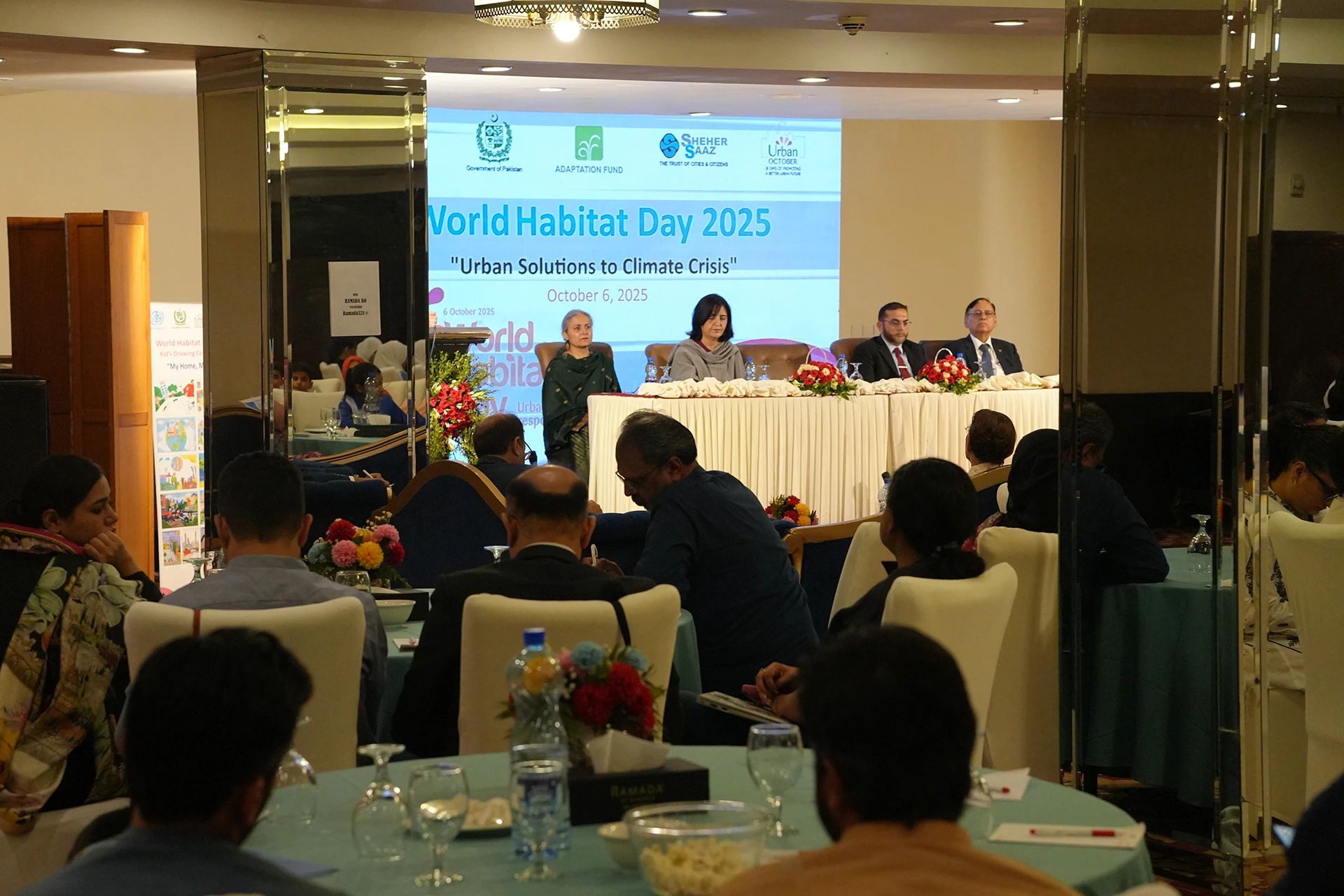
To mark World Habitat Day 2025, Shehersaaz, in collaboration with UN-Habitat and the Adaptation Fund, organized a dynamic event at Ramada Hotel, Islamabad, under the theme “Urban Solutions to Climate Crisis.” The event convened senior government officials, urban planners, development practitioners, and youth advocates to discuss the urgent need for sustainable and resilient cities in Pakistan.
The celebration served as a powerful reminder of the growing impact of urbanization, climate change, and the shared responsibility to make cities more livable, inclusive, and environmentally stable.
Inaugural Session: Setting the Tone for Resilient Urban Futures
The day opened with registration and networking, followed by an inaugural session that gathered policymakers and urban experts for a meaningful dialogue on climate-responsive planning.
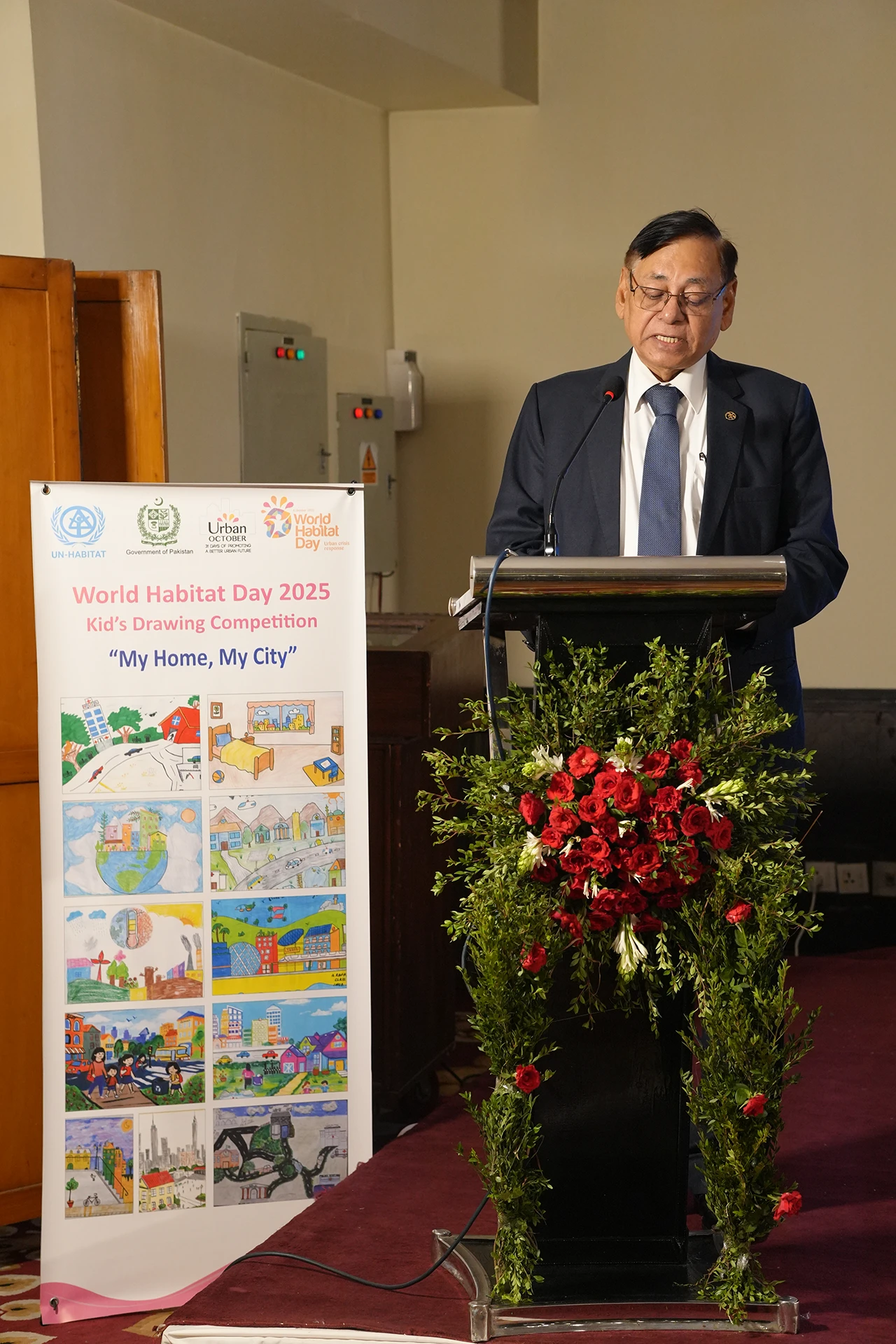
Mr. Jawed Ali Khan, Senior Advisor HMP, UN-Habitat, delivered the welcome remarks, emphasizing the importance of this year’s theme. Reflecting on the recent floods and recurring disasters in Pakistan, he underlined the vulnerability of the urban poor—who make up a majority of the population—and called for modern planning, resilience initiatives, and practical urban solutions to counter the climate crisis.
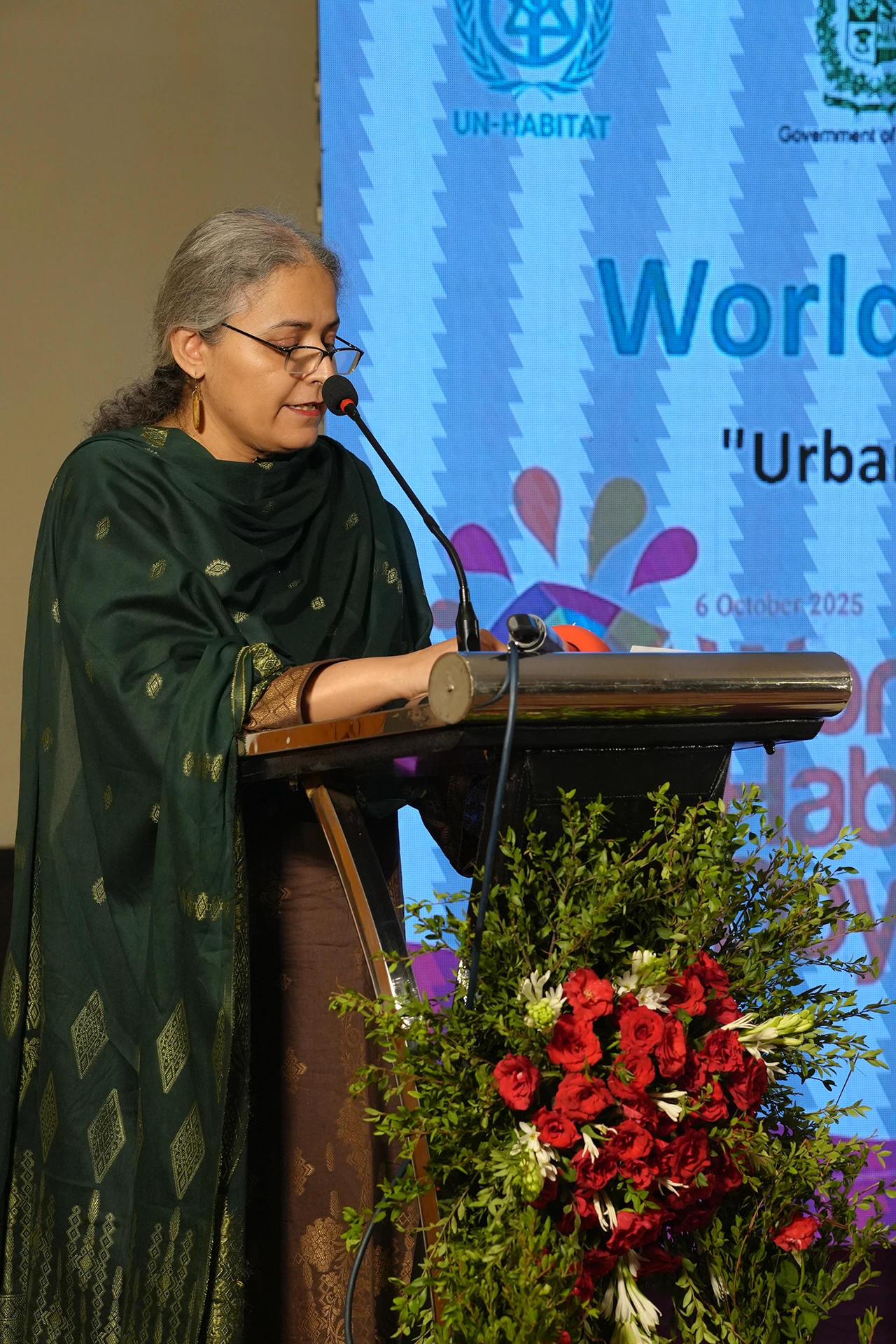
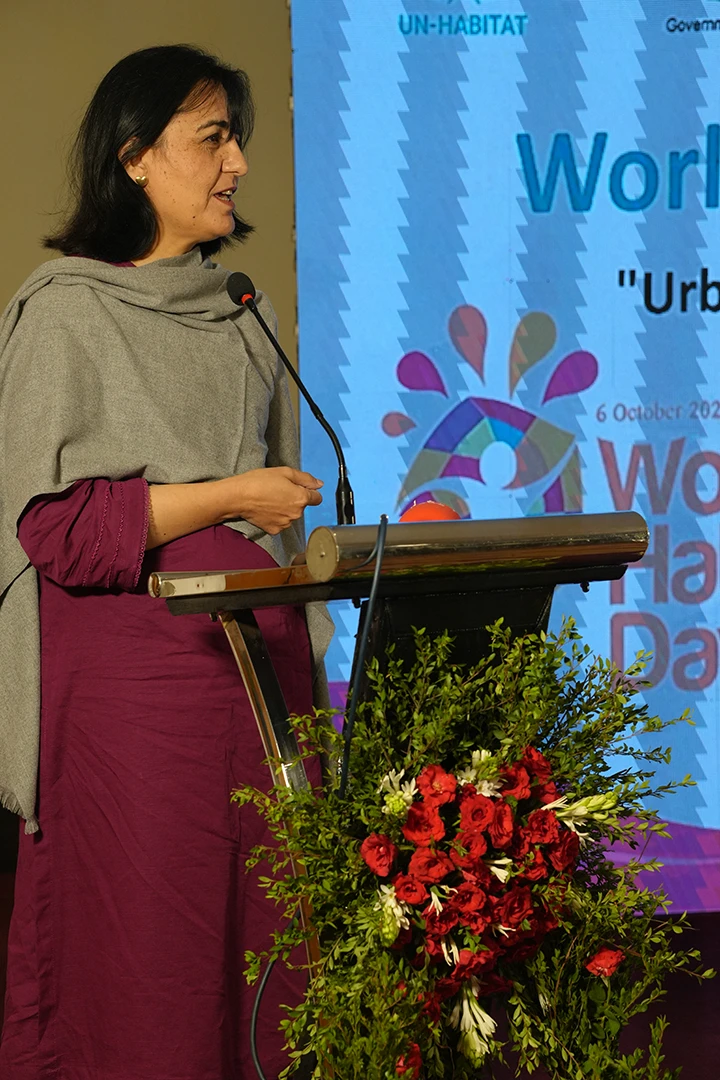
Ms. Almas Shakoor, Chief Executive Director, Shehersaaz, addressed the urban climate challenges facing Pakistan. Highlighting Shehersaaz’s Banyan Tree Park initiative under Urban October and citing the World Bank’s report on rapid urbanization, she drew attention to the pressing need for urban governance reforms. Ms. Shakoor emphasized the importance of participatory planning, affordable housing, GIS-based zoning reforms, and localized resource mobilization as pathways toward climate resilience.
Video messages from the UN Secretary-General and the Executive Director of UN-Habitat reinforced the global commitment to sustainable urbanization and the right to adequate shelter for all.
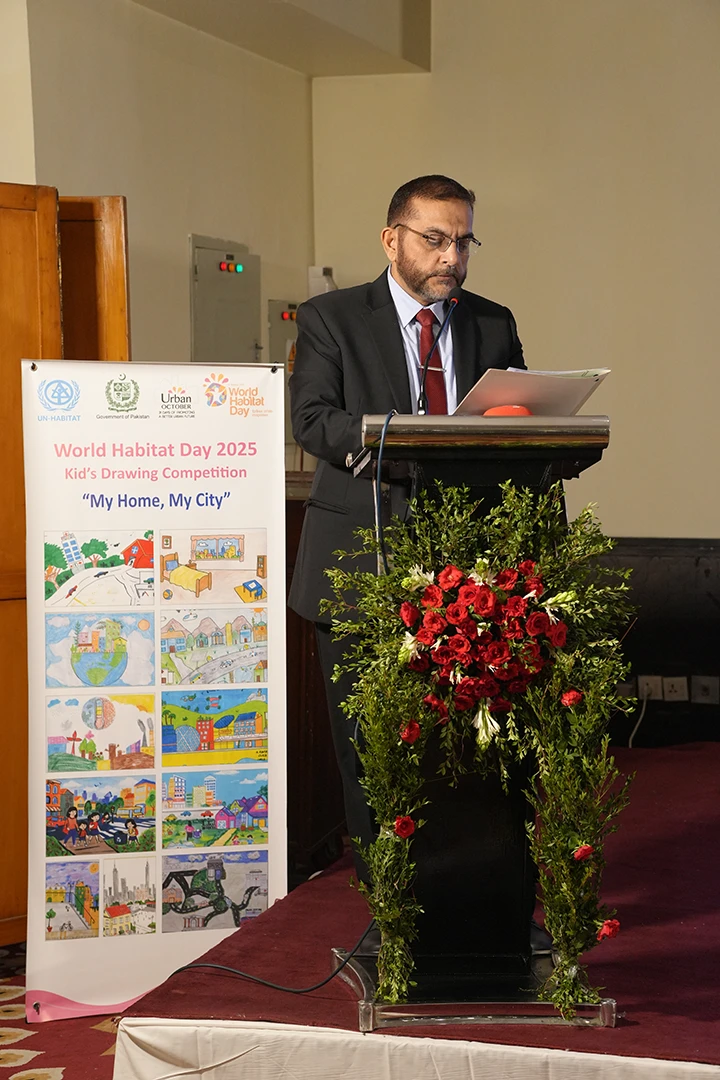
Mr. Idrees Mehsud, Member DRR, NDMA, presented Pakistan’s national strategy for urban climate crisis response, discussing the geophysical causes of disasters and recent flood patterns. He also warned of the potential tsunami risk in Gwadar, stressing the importance of preparedness, civic awareness, and NDMA’s safety-building courses. He further proposed pilot projects to mitigate urban disasters and strengthen resilience in high-risk areas.
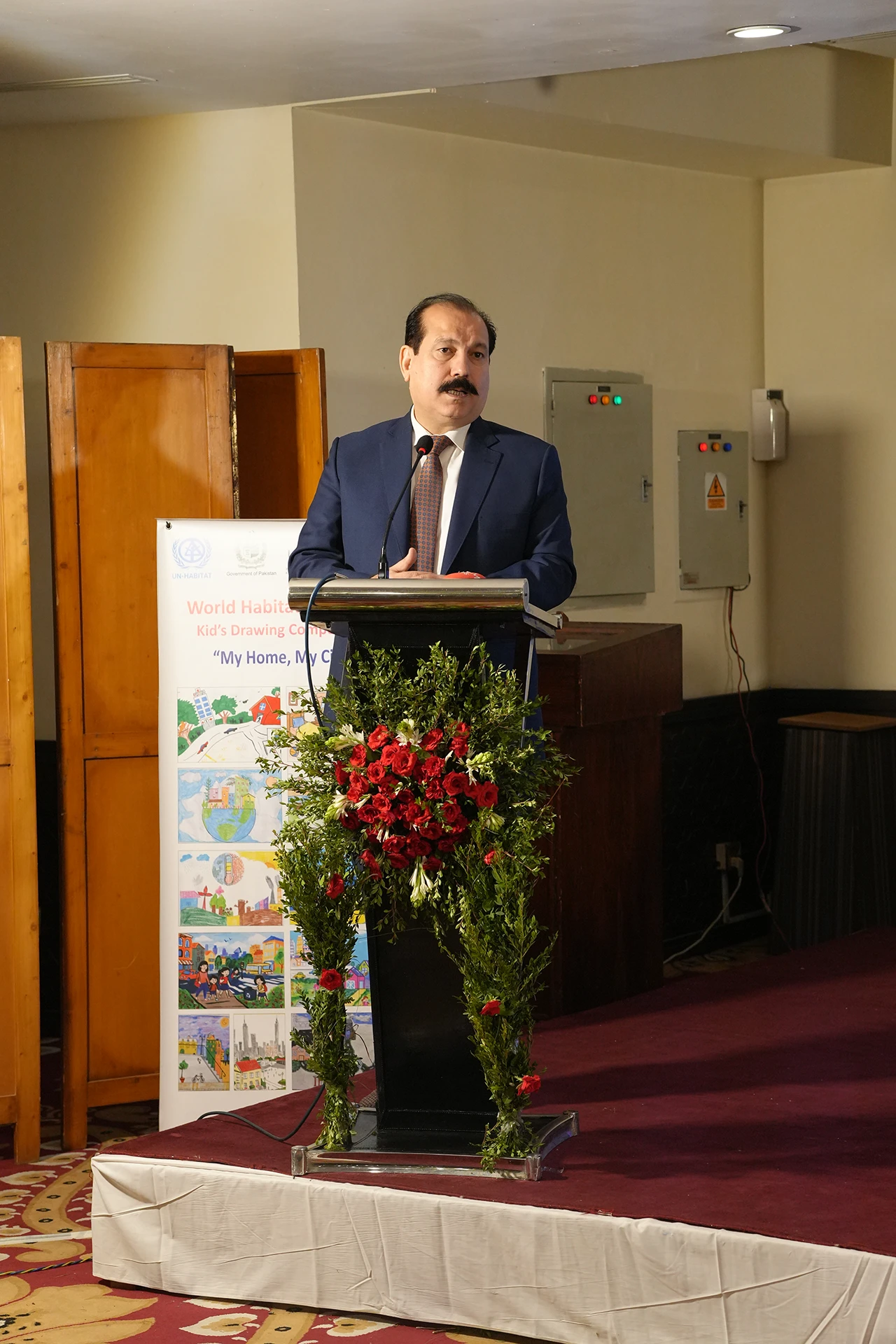
Representing the Capital Development Authority (CDA), Mr. Khalid Hafeez, Member Planning, shared ongoing efforts to make Islamabad a modern and green city. He highlighted CDA’s initiatives, including constructing 100 groundwater recharge wells, introducing EV charging stations in all parking areas, and curbing urban air pollution through stricter environmental standards.
From the Aga Khan Agency for Habitat, Ms. Nusrat Masab spoke about the growing challenges of urban poverty and unlivable environments. She emphasized the vital role of women, youth, and low-income households in building resilient communities and shared examples of innovative urban solutions and disaster preparedness initiatives implemented by her agency.
Recognizing Youth Creativity and Theatre for Change
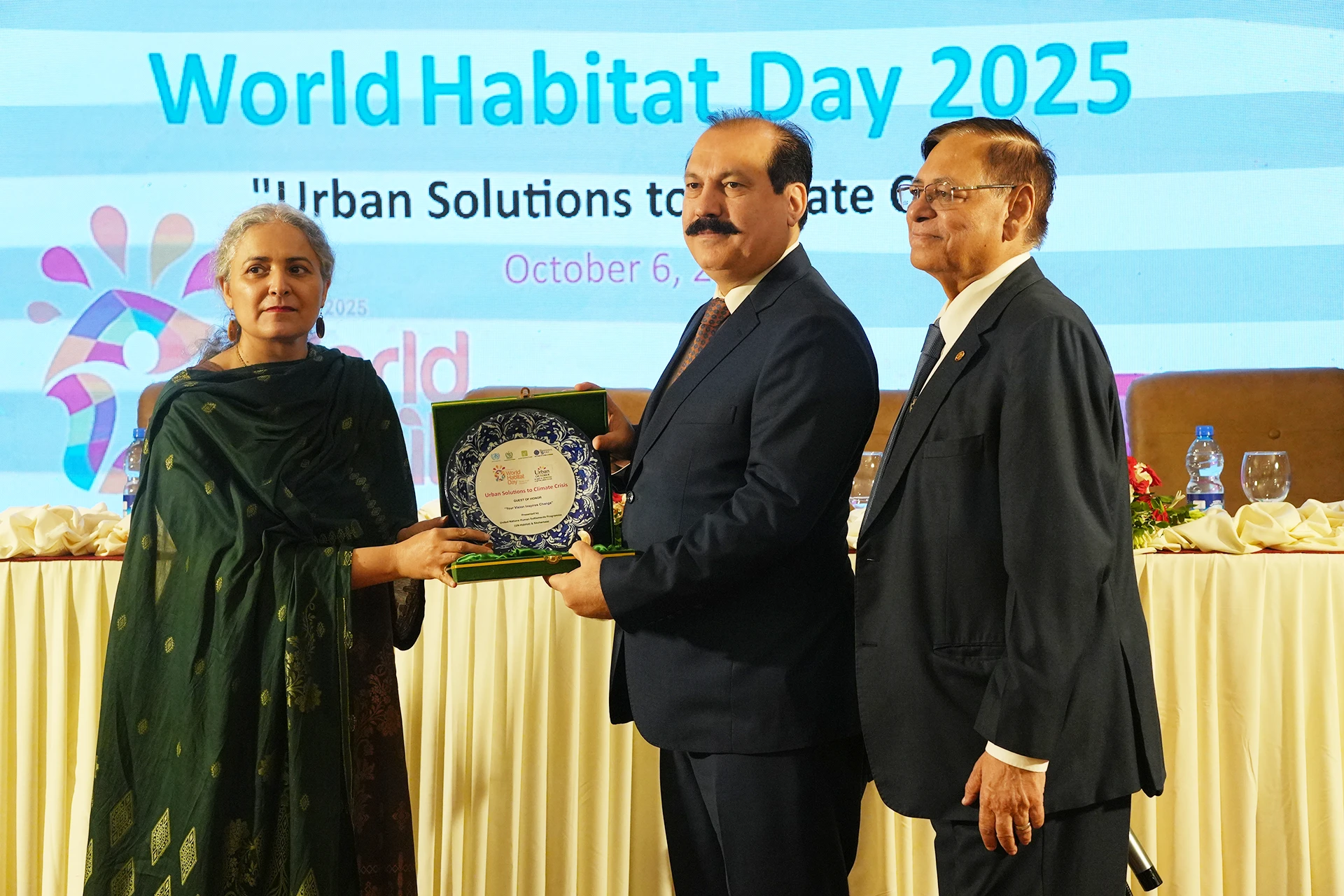
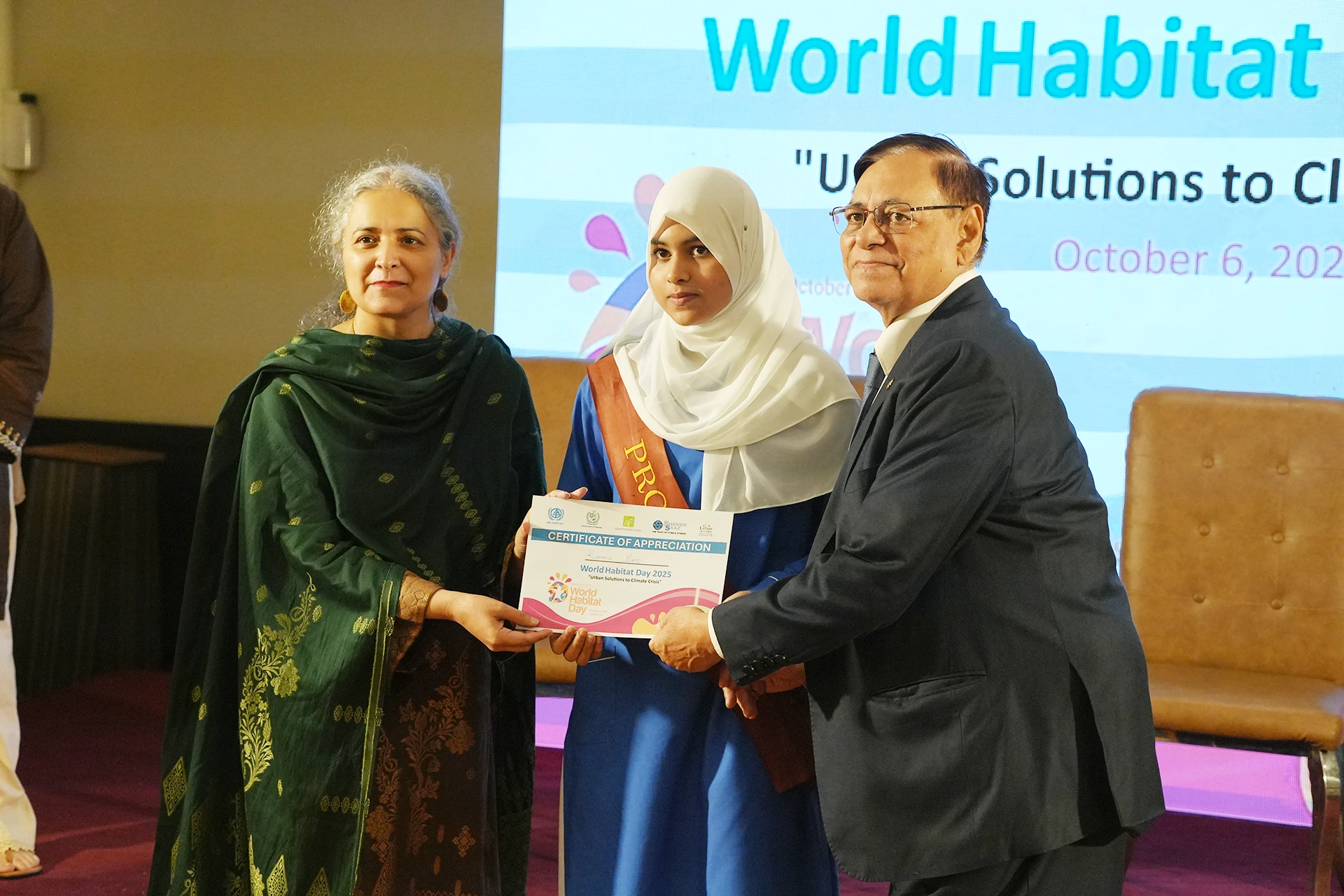
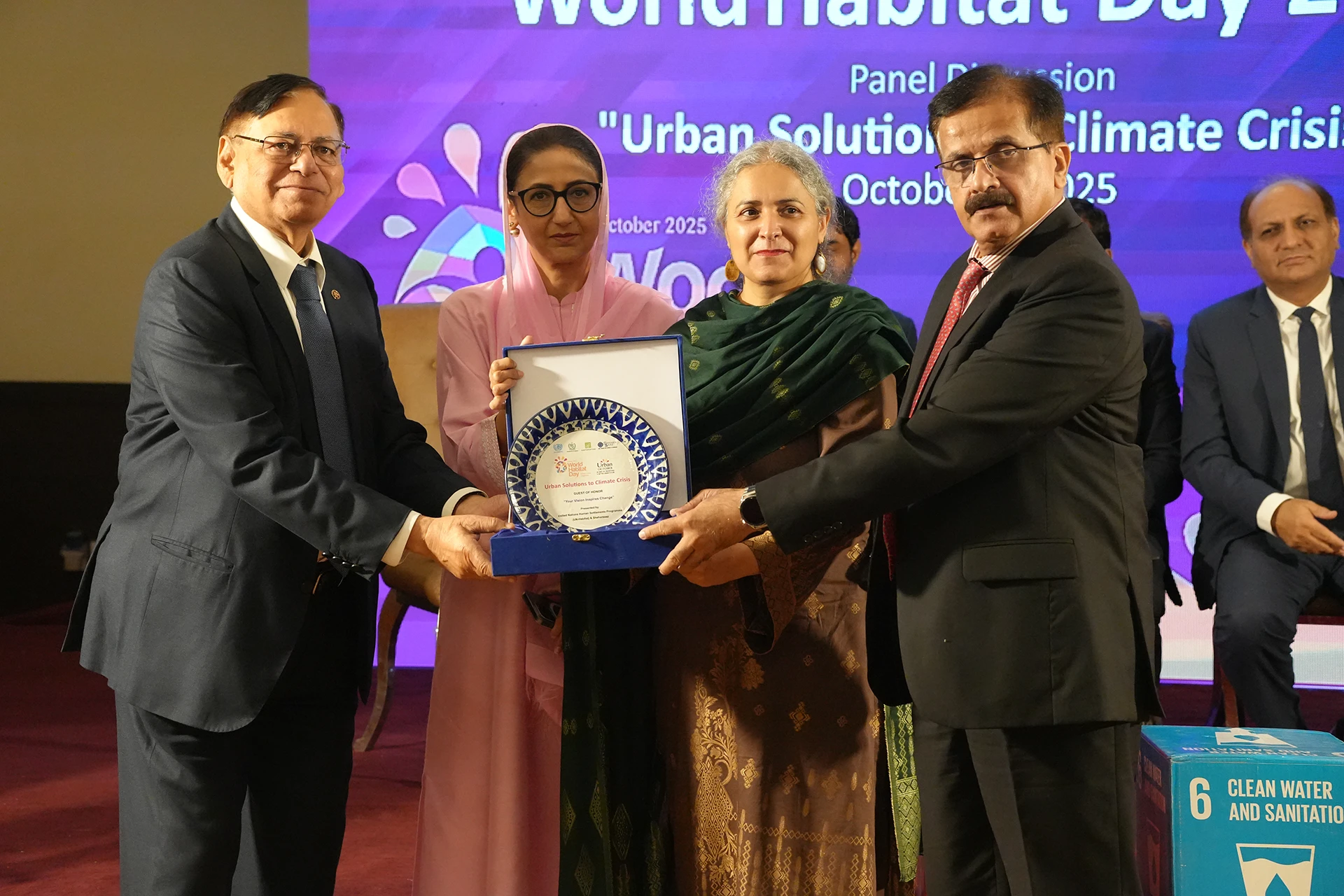
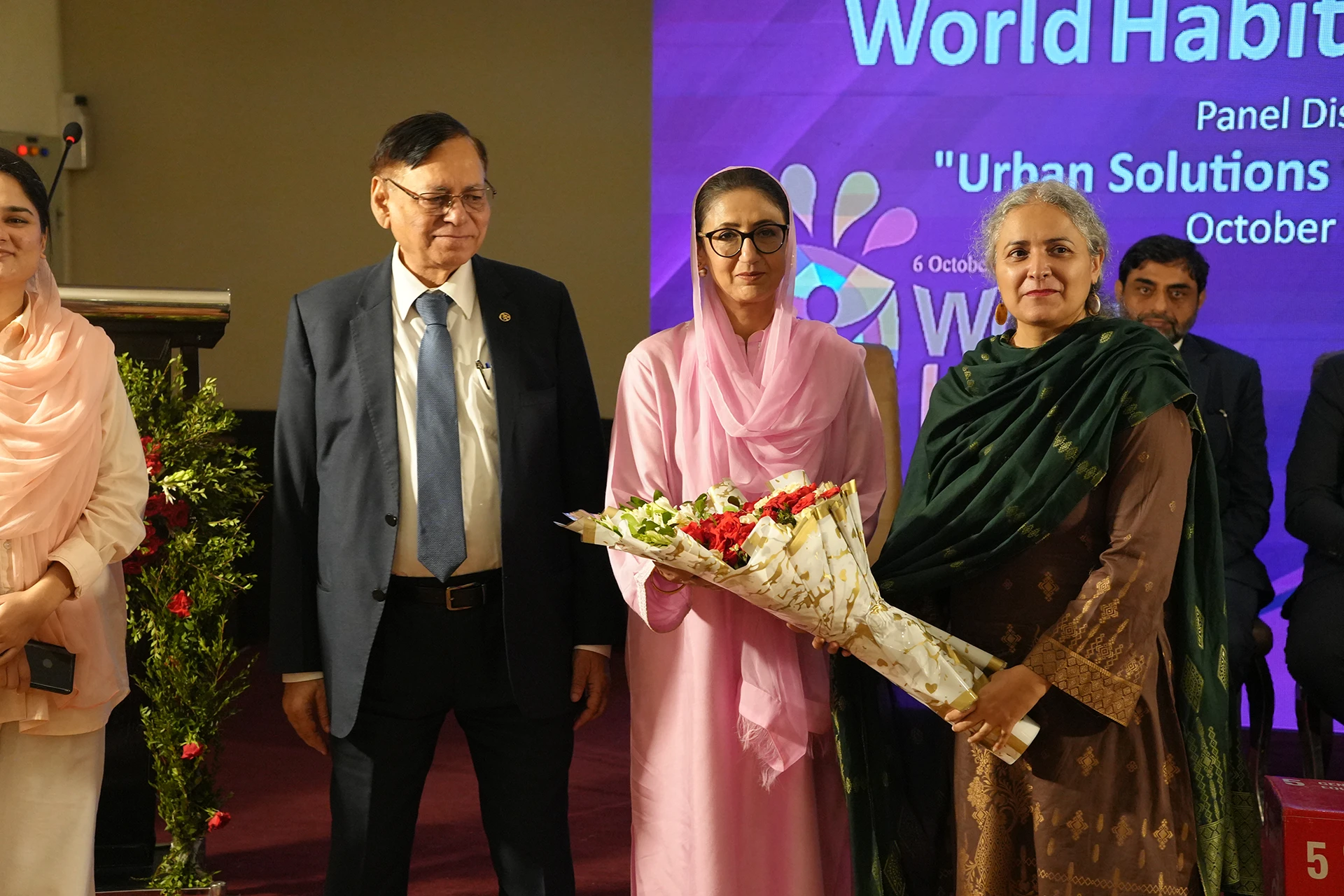
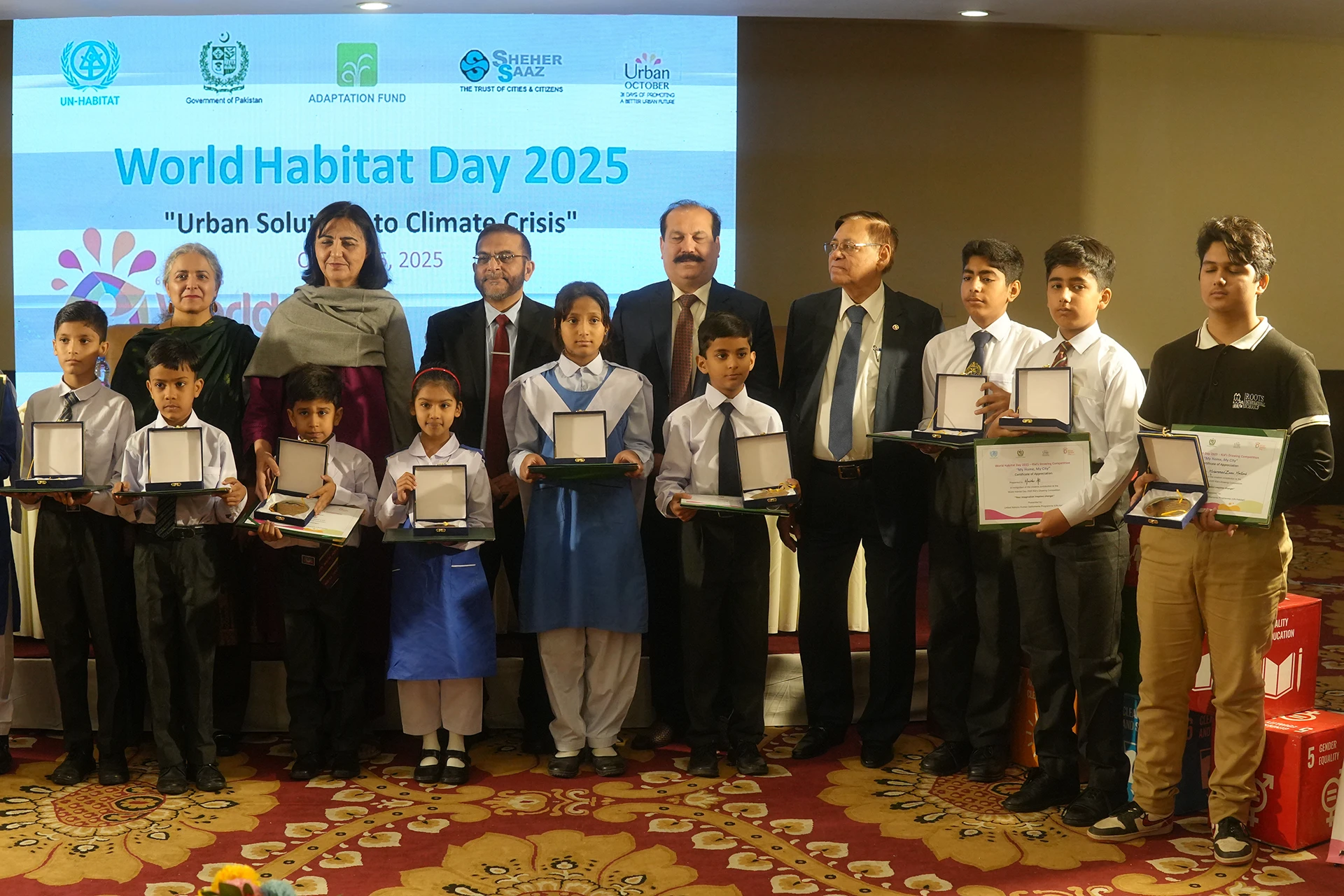
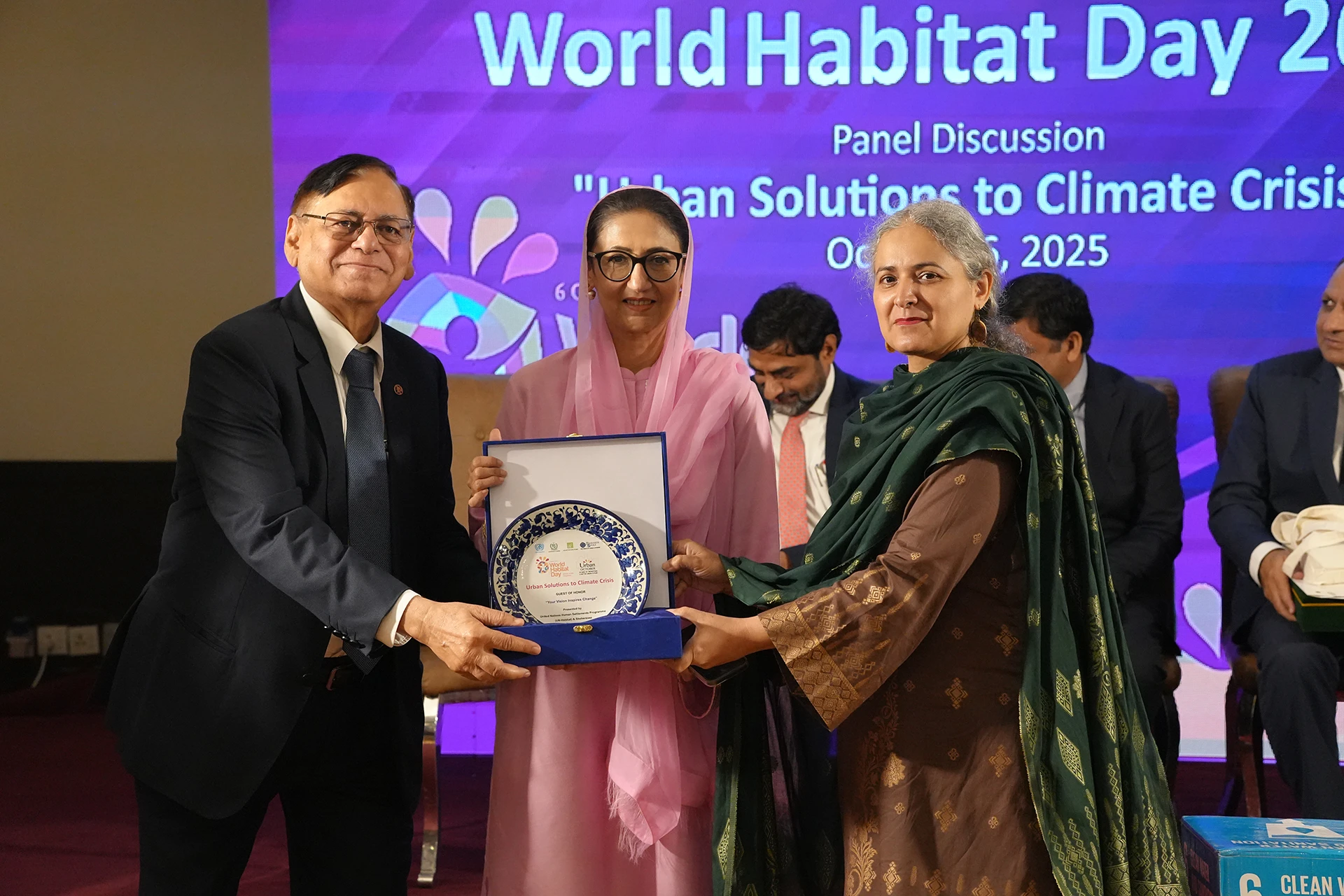
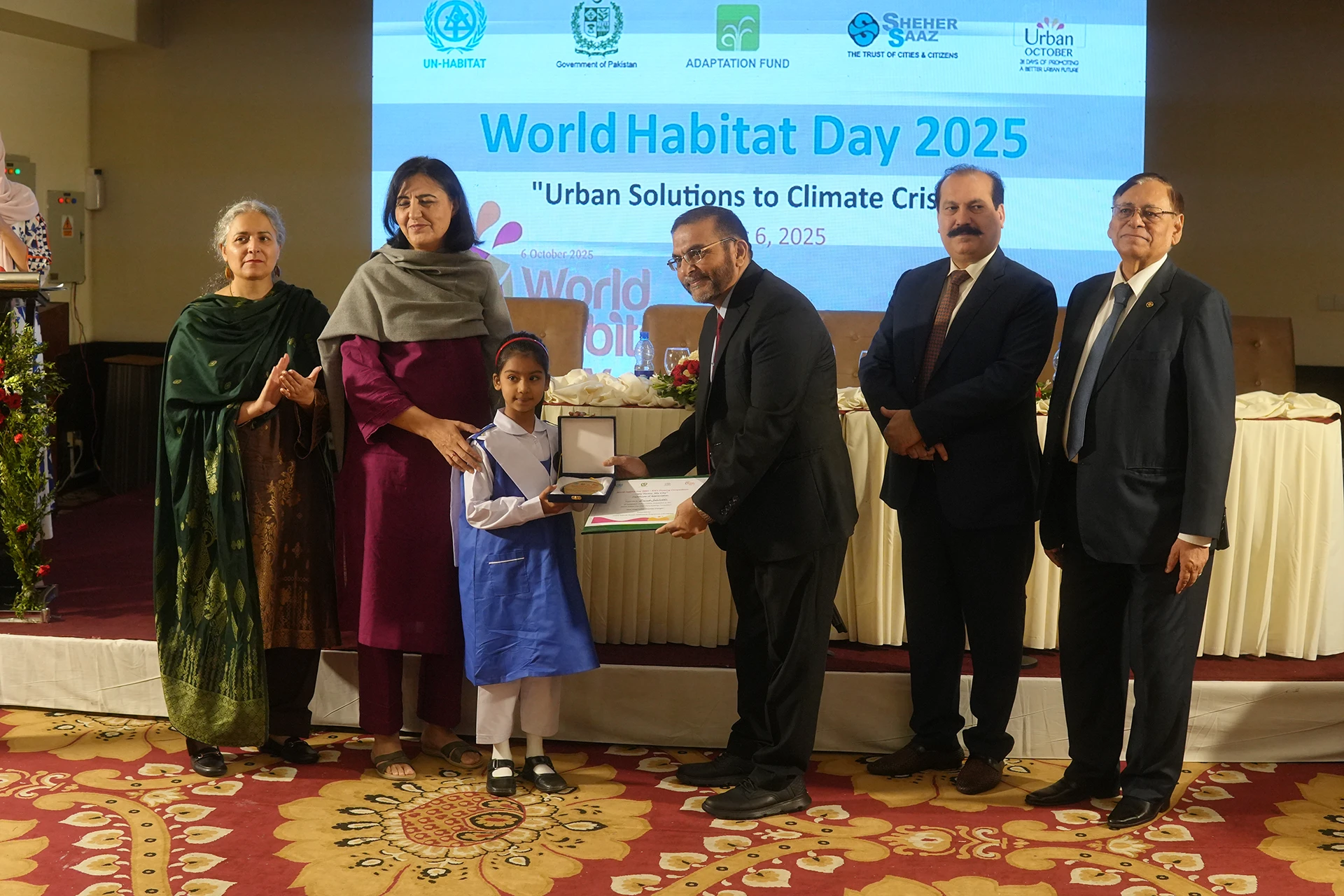
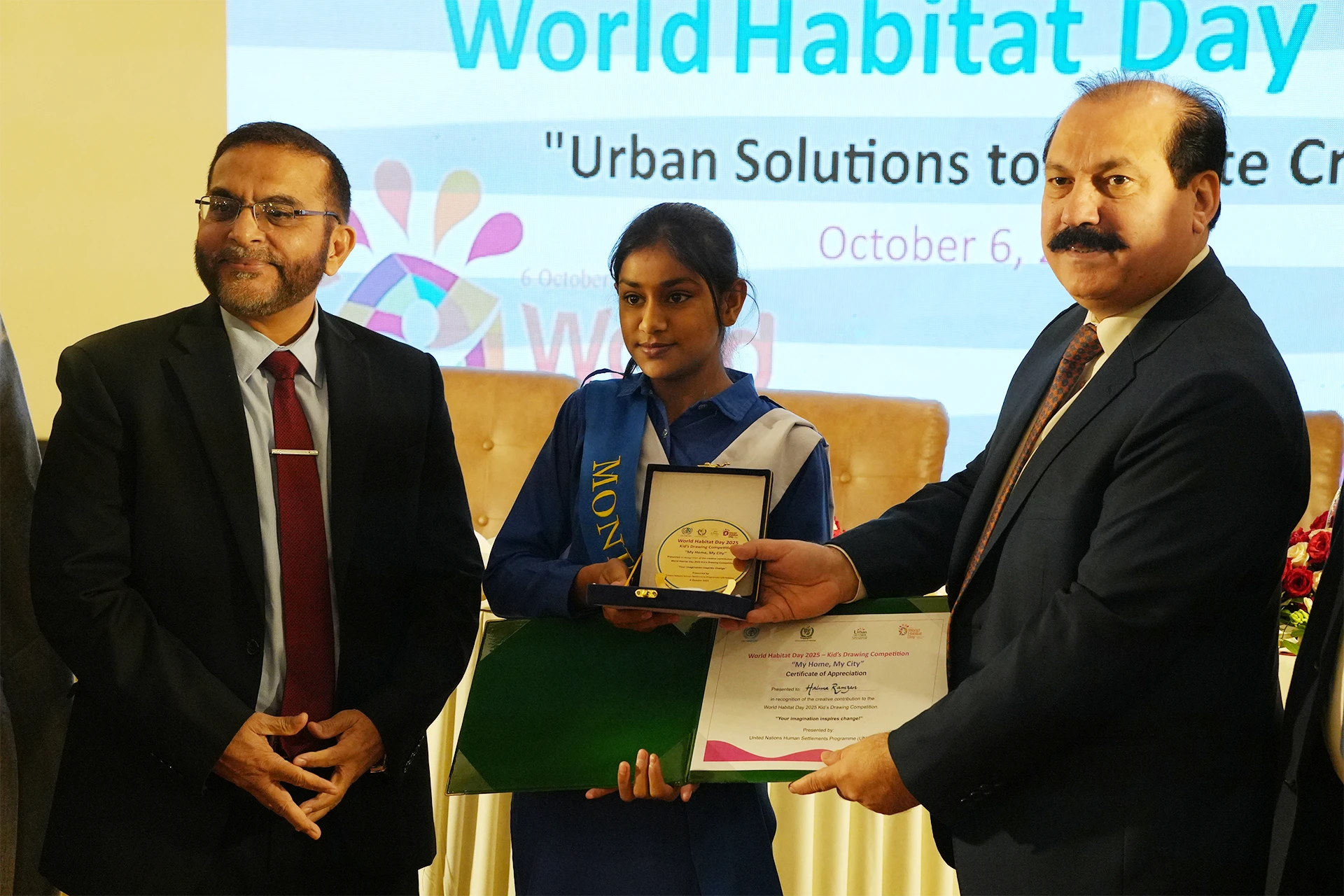
Following the inaugural session, shields were presented to guest speakers, and winners of the children’s drawing competition were recognized for their creativity. The artworks, displayed at the venue, reflected children’s visions of sustainable and inclusive cities. Certificates were also distributed to all young participants for their contributions.
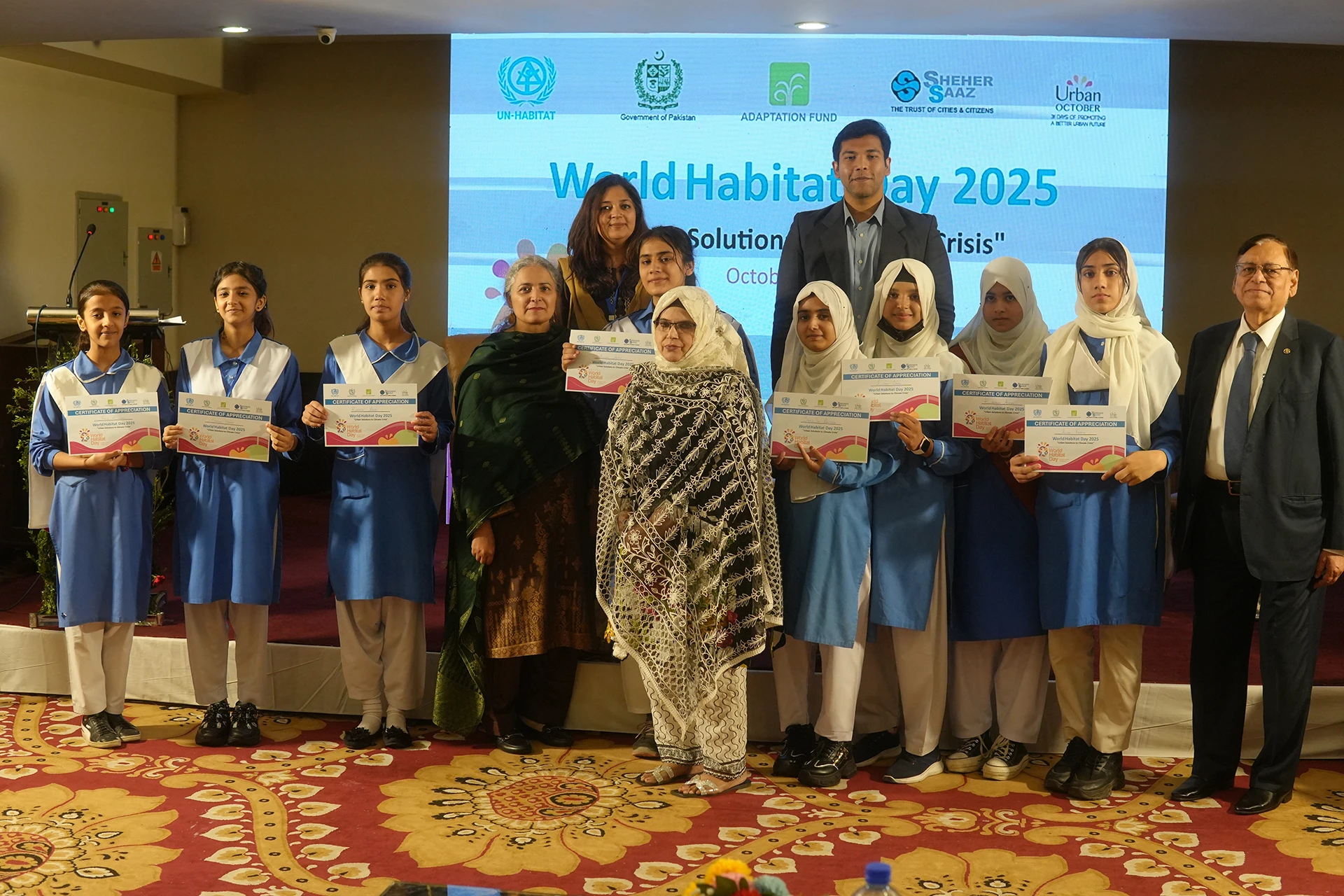
After a short break, the audience enjoyed a youth theatre performance titled “Our City, Our Future”, presented by students from Government Girls High School New Katarian, Rawalpindi. The play, developed under the guidance of Mr. Ahad Ali Siddiqui from Shehersaaz, explored crucial themes such as water conservation, tree plantation, and waste management. Written and performed by the students, the performance offered an inspiring example of how creative expression can drive environmental awareness and civic engagement. The young performers were also awarded certificates for their participation.
Panel Discussion: Urban Solutions to Climate Crisis
The central highlight of the event was the panel discussion, featuring representatives from UN-Habitat, Shehersaaz, NDMA, CDA, and the Aga Khan Agency for Habitat. Experts discussed the multifaceted nature of urban resilience, emphasizing the need for coordination across institutions and active participation from local communities.
Key discussion points included the protection of agricultural land, prevention of city expansion into riverbeds and fragile ecosystems, and managing cities “like a human body”—where every system must remain balanced and interconnected. Panelists also underscored the importance of nature-based solutions, data-driven planning, and social awareness tools such as art and theatre for fostering long-term behavioral change.
A lively Q&A session followed, allowing participants to exchange ideas and explore practical pathways for sustainable urban growth.
Closing Session: A Call for Collective Urban Action
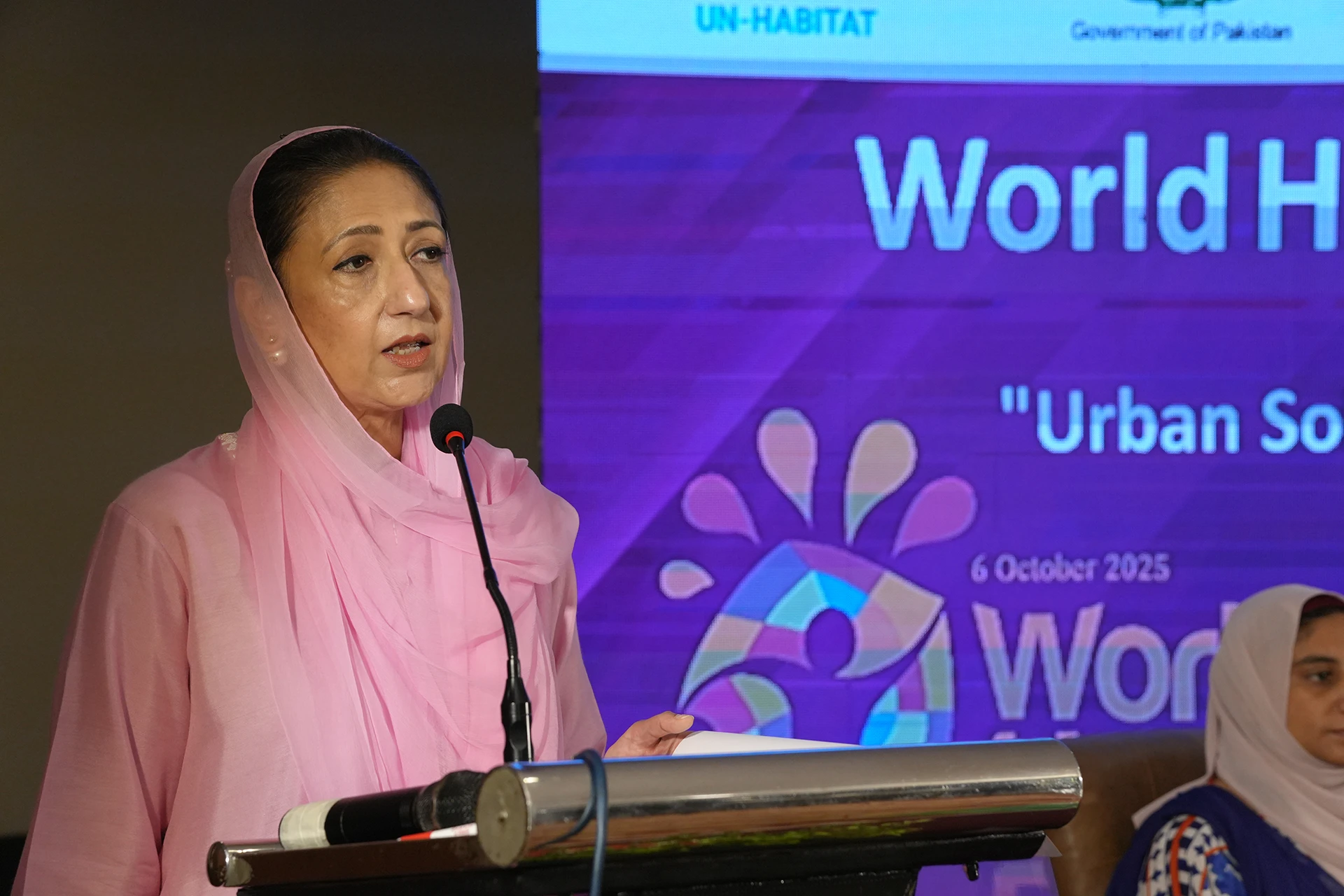
The event concluded with Dr. Shezra Mansab Ali Khan Kharal, Minister of State, Ministry of Climate Change and Environmental Coordination (MoCC&EC), who commended the efforts of all partners. She highlighted the need for urban planning to address illegal encroachments and displacement caused by floods and stressed the role of the New Urban Agenda in shaping climate-resilient cities. Dr. Kharal reaffirmed the Government of Pakistan’s commitment to supporting projects that promote sustainable urban management and community-driven climate action.
Conclusion
Celebrated globally every year, World Habitat Day serves as a reminder of the universal right to adequate shelter and the shared responsibility of creating livable cities. The 2025 observance in Islamabad stood out as a vibrant, inclusive platform that brought together policymakers, experts, and youth to share knowledge, creativity, and action toward greener, more inclusive, and climate-resilient urban futures for Pakistan.