Shehersaaz Celebrates PUCCAR Achievements, Recognises Collective Climate Action
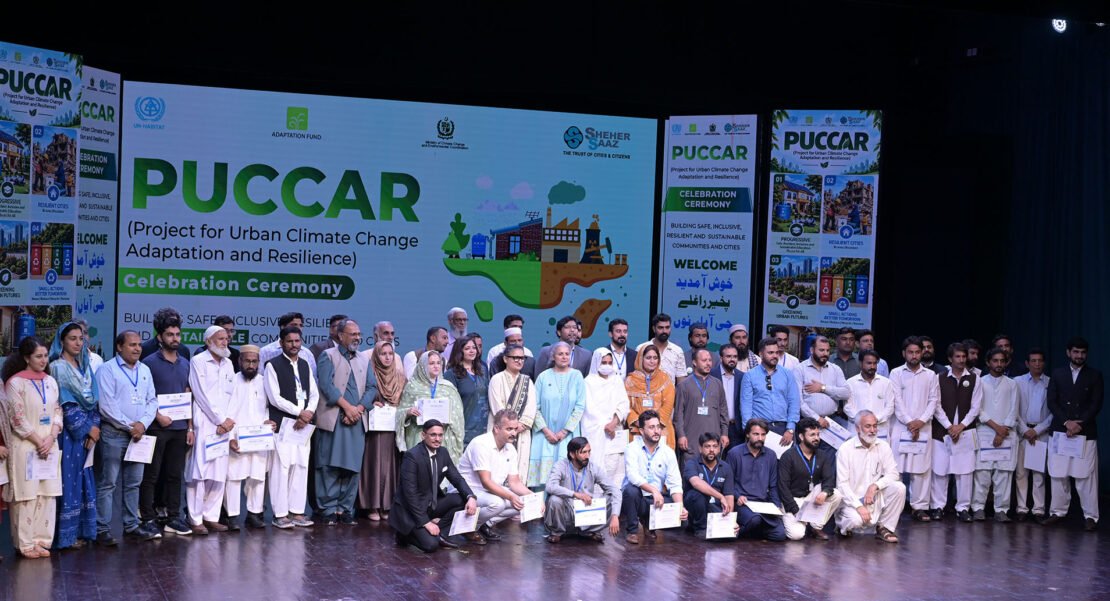
ISLAMABAD: Shehersaaz marked the achievements of the Project for Urban Climate Change Adaptation and Resilience (PUCCAR) with a celebratory event at the Pakistan National Council of the Arts (PNCA), Islamabad, bringing together partners, team members and stakeholders to recognise collective efforts toward building climate-resilient communities.
The event reflected on PUCCAR’s achievements in Rawalpindi and Nowshera and highlighted the importance of partnerships, community participation and sustained action in addressing the impacts of climate change.
A total number of 450 participants were present at the event, including 298 men and 152 women. Community members and staff from Rawalpindi, Nowshera and Islamabad along with notable dignitaries were present at the event to celebrate PUCCAR achievements.
The ceremony featured messages from Ms. Almas Shakoor, Executive Director of Shehersaaz, Mr. Jawed Ali Khan, Senior Advisor, UN-Habitat Pakistan, Ms. Odicea Angelo Barrios, Human Settlements Officer at UN-Habitat, and Mr. Waqar Syed, Country Program Manager at UN-Habitat Pakistan. Speakers highlighted the role of collaborative approaches and community-led initiatives in advancing urban climate adaptation.
Implemented by Shehersaaz in partnership with UN-Habitat, with financial support from the Adaptation Fund, PUCCAR reached communities across 15 Union Councils and Neighbourhood Councils. The project resulted in the installation of 5,060 rainwater harvesting units, creating a combined storage capacity of 7,570,450 litres of rainwater and benefiting 97,867 people.
The initiative also provided climate-related training to 16,662 individuals, supported interventions in 60 educational institutions, and facilitated 80 youth-led climate adaptation projects.
The celebration brought these efforts to the stage through Theatre Wallay’s “Pani Sab Ka Aik,” a powerful Urdu social theatre performance directed by Ahad Ali Siddiqui, highlighting water conservation, responsible resource use, community participation and behavioural change.
The 5 years extensive and impactful work of PUCCAR was shown as a documentary evidence of the project, filmed by Keychain Films.
The audience greatly appreciated the efforts. From social mobilizing to building technical drawings and execution, from segregating waste to making compost and becoming women entrepreneur and from disaster worried to being disaster ready, Shehersaaz Team made this possible and stood proud.
The evening also featured the exclusive musical piece “Boond Boond Pani – Ik Nai Kahani,” written, composed and performed by Mr. Furqan Ahmad, a visually impaired artist from FA Virtual Studio, with Ms. Anahita Sajjad also lending her voice to the production.
Certificates of Appreciation were presented to Shehersaaz team members from Nowshera, Rawalpindi and Islamabad in recognition of their dedication and contribution to the successful implementation of PUCCAR.
Through “Voices from Communities,” participants from Rawalpindi, Nowshera and Rescue 1122 shared their experiences, bringing the people-centered impact of PUCCAR to the forefront.
From rainwater harvesting and climate adaptation to theatre, music, project documentary and community voices, the evening reflected a shared message: climate action and resilience become meaningful when people come together.
The ceremony served as an occasion to acknowledge the people, communities and partners whose collective efforts contributed to the project’s achievements and to reaffirm the importance of continued climate action.
Together, Shehersaaz and its partners are working toward more resilient communities in the face of a changing climate.
The event reflected on PUCCAR’s achievements in Rawalpindi and Nowshera and highlighted the importance of partnerships, community participation and sustained action in addressing the impacts of climate change.
A total number of 450 participants were present at the event, including 298 men and 152 women. Community members and staff from Rawalpindi, Nowshera and Islamabad along with notable dignitaries were present at the event to celebrate PUCCAR achievements.
The ceremony featured messages from Ms. Almas Shakoor, Executive Director of Shehersaaz, Mr. Jawed Ali Khan, Senior Advisor, UN-Habitat Pakistan, Ms. Odicea Angelo Barrios, Human Settlements Officer at UN-Habitat, and Mr. Waqar Syed, Country Program Manager at UN-Habitat Pakistan. Speakers highlighted the role of collaborative approaches and community-led initiatives in advancing urban climate adaptation.
Implemented by Shehersaaz in partnership with UN-Habitat, with financial support from the Adaptation Fund, PUCCAR reached communities across 15 Union Councils and Neighbourhood Councils. The project resulted in the installation of 5,060 rainwater harvesting units, creating a combined storage capacity of 7,570,450 litres of rainwater and benefiting 97,867 people.
The initiative also provided climate-related training to 16,662 individuals, supported interventions in 60 educational institutions, and facilitated 80 youth-led climate adaptation projects.
The celebration brought these efforts to the stage through Theatre Wallay’s “Pani Sab Ka Aik,” a powerful Urdu social theatre performance directed by Ahad Ali Siddiqui, highlighting water conservation, responsible resource use, community participation and behavioural change.
The 5 years extensive and impactful work of PUCCAR was shown as a documentary evidence of the project, filmed by Keychain Films.
The audience greatly appreciated the efforts. From social mobilizing to building technical drawings and execution, from segregating waste to making compost and becoming women entrepreneur and from disaster worried to being disaster ready, Shehersaaz Team made this possible and stood proud.
The evening also featured the exclusive musical piece “Boond Boond Pani – Ik Nai Kahani,” written, composed and performed by Mr. Furqan Ahmad, a visually impaired artist from FA Virtual Studio, with Ms. Anahita Sajjad also lending her voice to the production.
Certificates of Appreciation were presented to Shehersaaz team members from Nowshera, Rawalpindi and Islamabad in recognition of their dedication and contribution to the successful implementation of PUCCAR.
Through “Voices from Communities,” participants from Rawalpindi, Nowshera and Rescue 1122 shared their experiences, bringing the people-centered impact of PUCCAR to the forefront.
From rainwater harvesting and climate adaptation to theatre, music, project documentary and community voices, the evening reflected a shared message: climate action and resilience become meaningful when people come together.
The ceremony served as an occasion to acknowledge the people, communities and partners whose collective efforts contributed to the project’s achievements and to reaffirm the importance of continued climate action.
Together, Shehersaaz and its partners are working toward more resilient communities in the face of a changing climate.