World Habitat Day 2025: Building Urban Solutions to the Climate Crisis
Islamabad, October 6, 2025
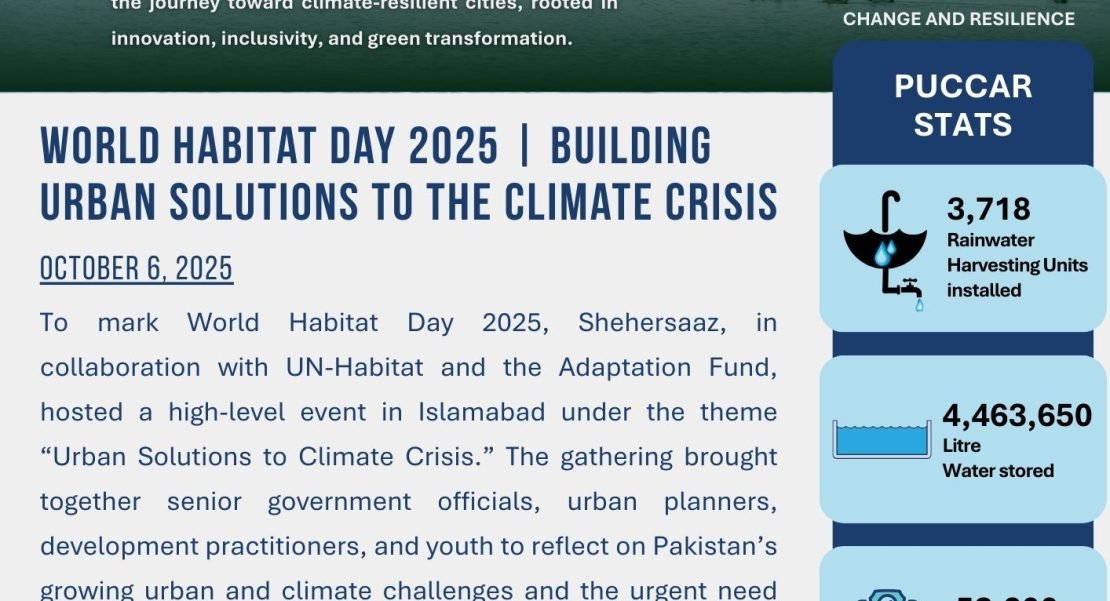
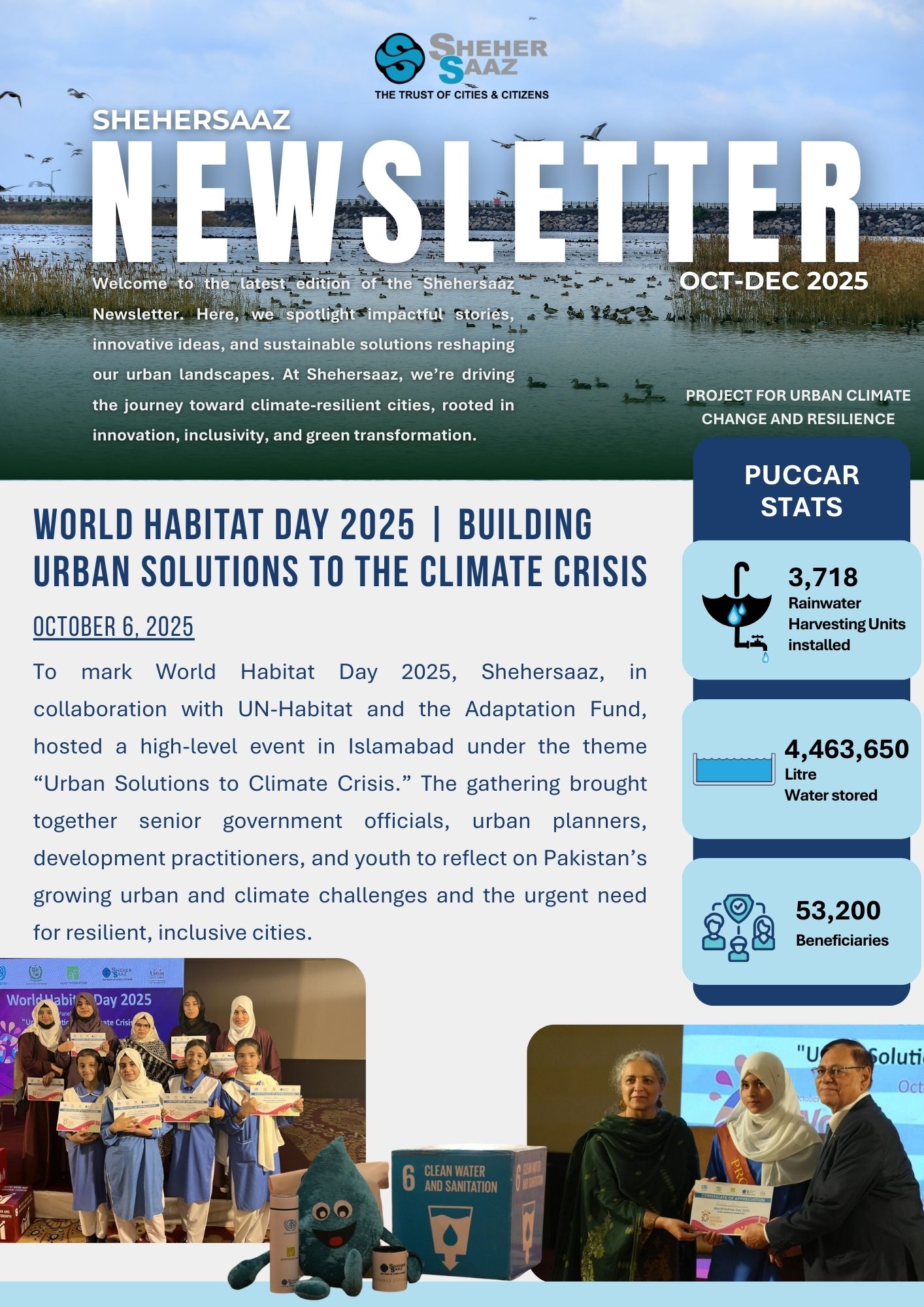
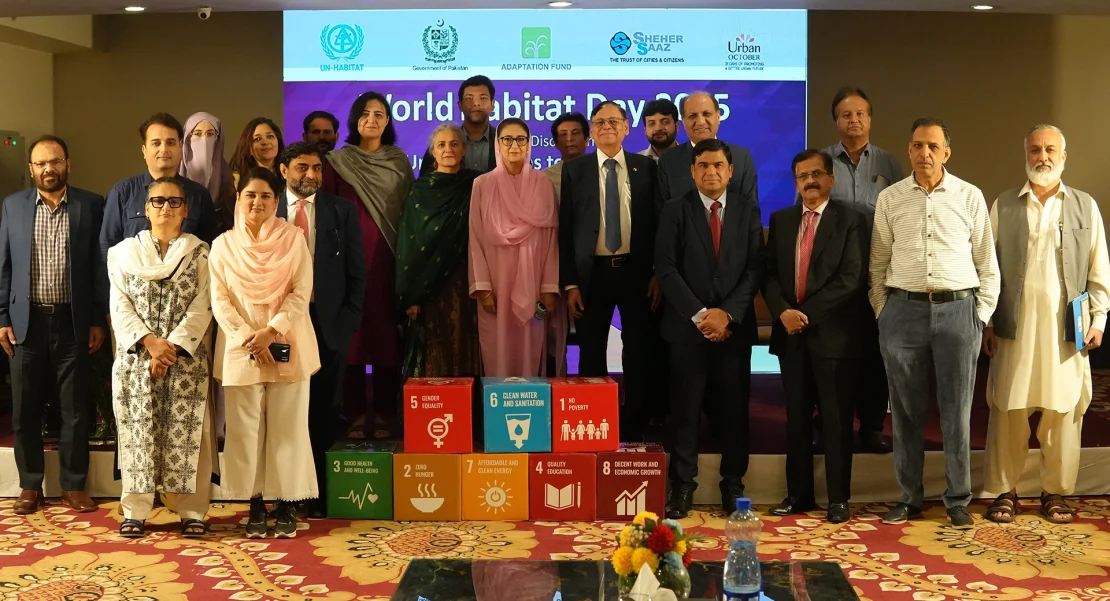
To mark World Habitat Day 2025, Shehersaaz, in collaboration with UN-Habitat and the Adaptation Fund, organized a dynamic event at Ramada Hotel, Islamabad, under the theme “Urban Solutions to Climate Crisis.” The event convened senior government officials, urban planners, development practitioners, and youth advocates to discuss the urgent need for sustainable and resilient cities in Pakistan.
The celebration served as a powerful reminder of the growing impact of urbanization, climate change, and the shared responsibility to make cities more livable, inclusive, and environmentally stable.
Inaugural Session: Setting the Tone for Resilient Urban Futures
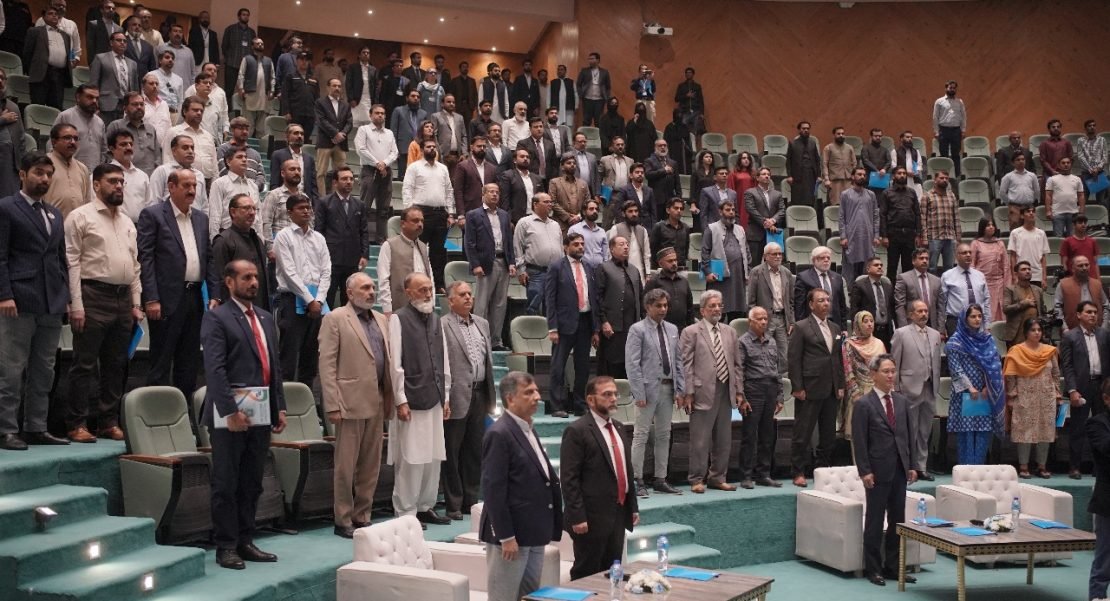
The day opened with registration and networking, followed by an inaugural session that gathered policymakers and urban experts for a meaningful dialogue on climate-responsive planning.
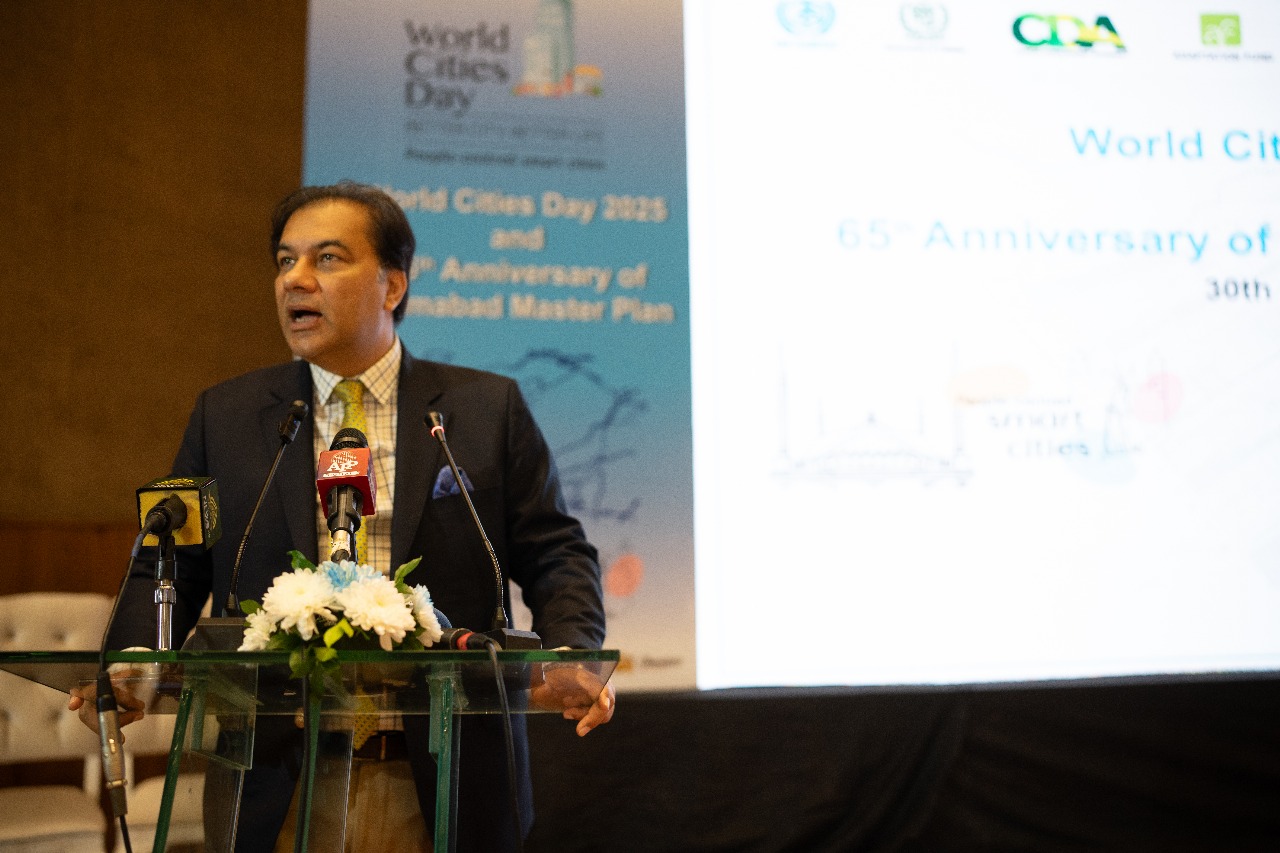
Mr. Jawed Ali Khan, Senior Advisor HMP, UN-Habitat, delivered the welcome remarks, emphasizing the importance of this year’s theme. Reflecting on the recent floods and recurring disasters in Pakistan, he underlined the vulnerability of the urban poor—who make up a majority of the population—and called for modern planning, resilience initiatives, and practical urban solutions to counter the climate crisis.
Ms. Almas Shakoor, Chief Executive Director, Shehersaaz, addressed the urban climate challenges facing Pakistan. Highlighting Shehersaaz’s Banyan Tree Park initiative under Urban October and citing the World Bank’s report on rapid urbanization, she drew attention to the pressing need for urban governance reforms. Ms. Shakoor emphasized the importance of participatory planning, affordable housing, GIS-based zoning reforms, and localized resource mobilization as pathways toward climate resilience.
Video messages from the UN Secretary-General and the Executive Director of UN-Habitat reinforced the global commitment to sustainable urbanization and the right to adequate shelter for all.
Mr. Idrees Mehsud, Member DRR, NDMA, presented Pakistan’s national strategy for urban climate crisis response, discussing the geophysical causes of disasters and recent flood patterns. He also warned of the potential tsunami risk in Gwadar, stressing the importance of preparedness, civic awareness, and NDMA’s safety-building courses. He further proposed pilot projects to mitigate urban disasters and strengthen resilience in high-risk areas.
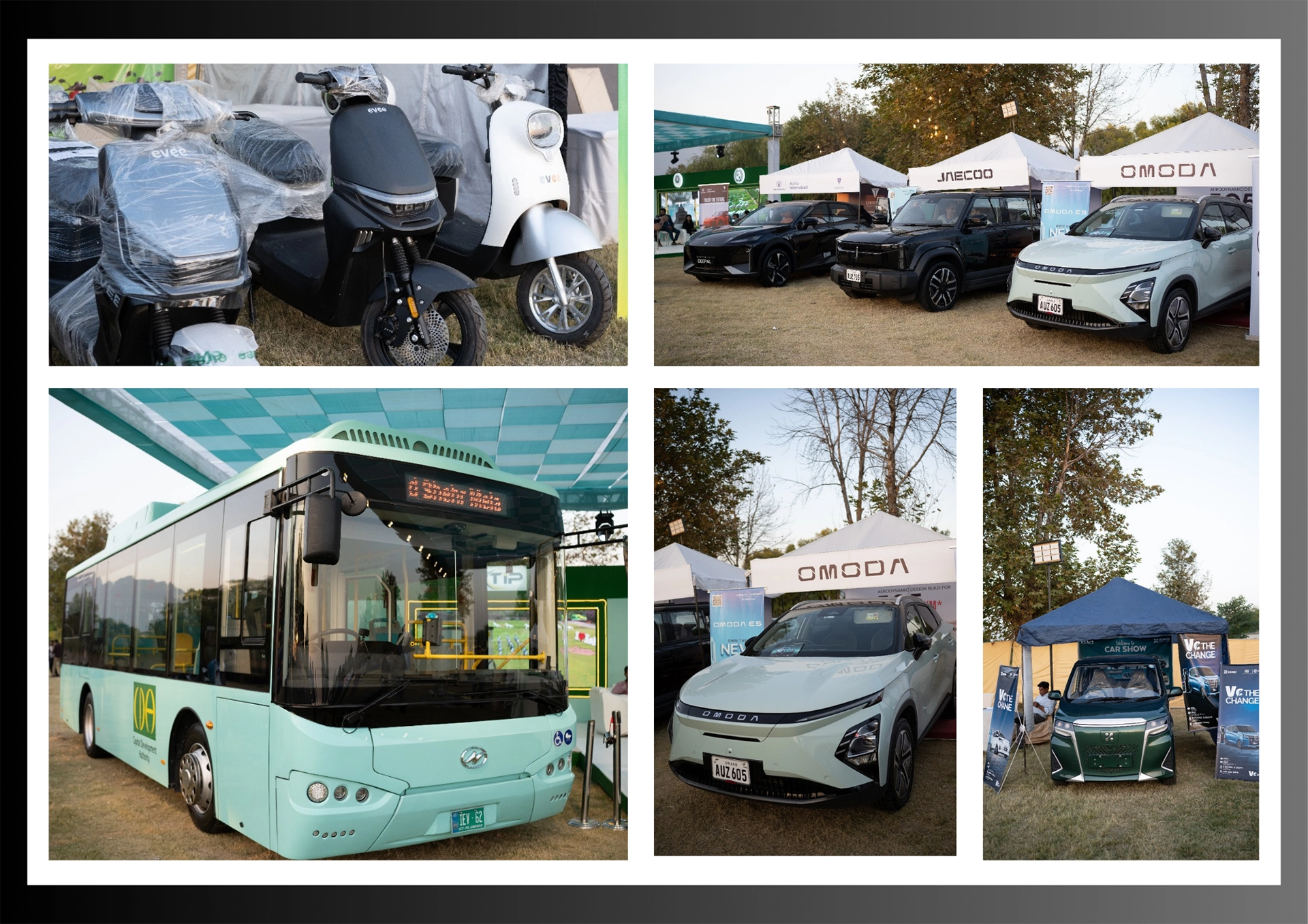
Representing the Capital Development Authority (CDA), Mr. Khalid Hafeez, Member Planning, shared ongoing efforts to make Islamabad a modern and green city. He highlighted CDA’s initiatives, including constructing 100 groundwater recharge wells, introducing EV charging stations in all parking areas, and curbing urban air pollution through stricter environmental standards.
From the Aga Khan Agency for Habitat, Ms. Nusrat Masab spoke about the growing challenges of urban poverty and unlivable environments. She emphasized the vital role of women, youth, and low-income households in building resilient communities and shared examples of innovative urban solutions and disaster preparedness initiatives implemented by her agency.
Recognizing Youth Creativity and Theatre for Change
Following the inaugural session, shields were presented to guest speakers, and winners of the children’s drawing competition were recognized for their creativity. The artworks, displayed at the venue, reflected children’s visions of sustainable and inclusive cities. Certificates were also distributed to all young participants for their contributions.
After a short break, the audience enjoyed a youth theatre performance titled “Our City, Our Future”, presented by students from Government Girls High School New Katarian, Rawalpindi. The play, developed under the guidance of Mr. Ahad Ali Siddiqui from Shehersaaz, explored crucial themes such as water conservation, tree plantation, and waste management. Written and performed by the students, the performance offered an inspiring example of how creative expression can drive environmental awareness and civic engagement. The young performers were also awarded certificates for their participation.
Panel Discussion: Urban Solutions to Climate Crisis
The central highlight of the event was the panel discussion, featuring representatives from UN-Habitat, Shehersaaz, NDMA, CDA, and the Aga Khan Agency for Habitat. Experts discussed the multifaceted nature of urban resilience, emphasizing the need for coordination across institutions and active participation from local communities.
Key discussion points included the protection of agricultural land, prevention of city expansion into riverbeds and fragile ecosystems, and managing cities “like a human body”—where every system must remain balanced and interconnected. Panelists also underscored the importance of nature-based solutions, data-driven planning, and social awareness tools such as art and theatre for fostering long-term behavioral change.
A lively Q&A session followed, allowing participants to exchange ideas and explore practical pathways for sustainable urban growth.
Closing Session: A Call for Collective Urban Action
The event concluded with Dr. Shezra Mansab Ali Khan Kharal, Minister of State, Ministry of Climate Change and Environmental Coordination (MoCC&EC), who commended the efforts of all partners. She highlighted the need for urban planning to address illegal encroachments and displacement caused by floods and stressed the role of the New Urban Agenda in shaping climate-resilient cities. Dr. Kharal reaffirmed the Government of Pakistan’s commitment to supporting projects that promote sustainable urban management and community-driven climate action.
Conclusion
Celebrated globally every year, World Habitat Day serves as a reminder of the universal right to adequate shelter and the shared responsibility of creating livable cities. The 2025 observance in Islamabad stood out as a vibrant, inclusive platform that brought together policymakers, experts, and youth to share knowledge, creativity, and action toward greener, more inclusive, and climate-resilient urban futures for Pakistan.
To mark World Habitat Day 2025, Shehersaaz, in collaboration with UN-Habitat and the Adaptation Fund, organized a dynamic event at Ramada Hotel, Islamabad, under the theme “Urban Solutions to Climate Crisis.” The event convened senior government officials, urban planners, development practitioners, and youth advocates to discuss the urgent need for sustainable and resilient cities in Pakistan.
The celebration served as a powerful reminder of the growing impact of urbanization, climate change, and the shared responsibility to make cities more livable, inclusive, and environmentally stable.
Inaugural Session: Setting the Tone for Resilient Urban Futures
The day opened with registration and networking, followed by an inaugural session that gathered policymakers and urban experts for a meaningful dialogue on climate-responsive planning.
Mr. Jawed Ali Khan, Senior Advisor HMP, UN-Habitat, delivered the welcome remarks, emphasizing the importance of this year’s theme. Reflecting on the recent floods and recurring disasters in Pakistan, he underlined the vulnerability of the urban poor—who make up a majority of the population—and called for modern planning, resilience initiatives, and practical urban solutions to counter the climate crisis.
Ms. Almas Shakoor, Chief Executive Director, Shehersaaz, addressed the urban climate challenges facing Pakistan. Highlighting Shehersaaz’s Banyan Tree Park initiative under Urban October and citing the World Bank’s report on rapid urbanization, she drew attention to the pressing need for urban governance reforms. Ms. Shakoor emphasized the importance of participatory planning, affordable housing, GIS-based zoning reforms, and localized resource mobilization as pathways toward climate resilience.
Video messages from the UN Secretary-General and the Executive Director of UN-Habitat reinforced the global commitment to sustainable urbanization and the right to adequate shelter for all.
Mr. Idrees Mehsud, Member DRR, NDMA, presented Pakistan’s national strategy for urban climate crisis response, discussing the geophysical causes of disasters and recent flood patterns. He also warned of the potential tsunami risk in Gwadar, stressing the importance of preparedness, civic awareness, and NDMA’s safety-building courses. He further proposed pilot projects to mitigate urban disasters and strengthen resilience in high-risk areas.
Representing the Capital Development Authority (CDA), Mr. Khalid Hafeez, Member Planning, shared ongoing efforts to make Islamabad a modern and green city. He highlighted CDA’s initiatives, including constructing 100 groundwater recharge wells, introducing EV charging stations in all parking areas, and curbing urban air pollution through stricter environmental standards.
From the Aga Khan Agency for Habitat, Ms. Nusrat Masab spoke about the growing challenges of urban poverty and unlivable environments. She emphasized the vital role of women, youth, and low-income households in building resilient communities and shared examples of innovative urban solutions and disaster preparedness initiatives implemented by her agency.
Recognizing Youth Creativity and Theatre for Change
Following the inaugural session, shields were presented to guest speakers, and winners of the children’s drawing competition were recognized for their creativity. The artworks, displayed at the venue, reflected children’s visions of sustainable and inclusive cities. Certificates were also distributed to all young participants for their contributions.
After a short break, the audience enjoyed a youth theatre performance titled “Our City, Our Future”, presented by students from Government Girls High School New Katarian, Rawalpindi. The play, developed under the guidance of Mr. Ahad Ali Siddiqui from Shehersaaz, explored crucial themes such as water conservation, tree plantation, and waste management. Written and performed by the students, the performance offered an inspiring example of how creative expression can drive environmental awareness and civic engagement. The young performers were also awarded certificates for their participation.
Panel Discussion: Urban Solutions to Climate Crisis
The central highlight of the event was the panel discussion, featuring representatives from UN-Habitat, Shehersaaz, NDMA, CDA, and the Aga Khan Agency for Habitat. Experts discussed the multifaceted nature of urban resilience, emphasizing the need for coordination across institutions and active participation from local communities.
Key discussion points included the protection of agricultural land, prevention of city expansion into riverbeds and fragile ecosystems, and managing cities “like a human body”—where every system must remain balanced and interconnected. Panelists also underscored the importance of nature-based solutions, data-driven planning, and social awareness tools such as art and theatre for fostering long-term behavioral change.
A lively Q&A session followed, allowing participants to exchange ideas and explore practical pathways for sustainable urban growth.
Closing Session: A Call for Collective Urban Action
The event concluded with Dr. Shezra Mansab Ali Khan Kharal, Minister of State, Ministry of Climate Change and Environmental Coordination (MoCC&EC), who commended the efforts of all partners. She highlighted the need for urban planning to address illegal encroachments and displacement caused by floods and stressed the role of the New Urban Agenda in shaping climate-resilient cities. Dr. Kharal reaffirmed the Government of Pakistan’s commitment to supporting projects that promote sustainable urban management and community-driven climate action.
Conclusion
Celebrated globally every year, World Habitat Day serves as a reminder of the universal right to adequate shelter and the shared responsibility of creating livable cities. The 2025 observance in Islamabad stood out as a vibrant, inclusive platform that brought together policymakers, experts, and youth to share knowledge, creativity, and action toward greener, more inclusive, and climate-resilient urban futures for Pakistan.
Shehersaaz Participates in SARNET International Conference 2025: “CONSERVING BLUE DIAMONDS: Creating Climate Resilience Through Rainwater Conservation & Management”
Lahore, 23rd and 24th September, 2025
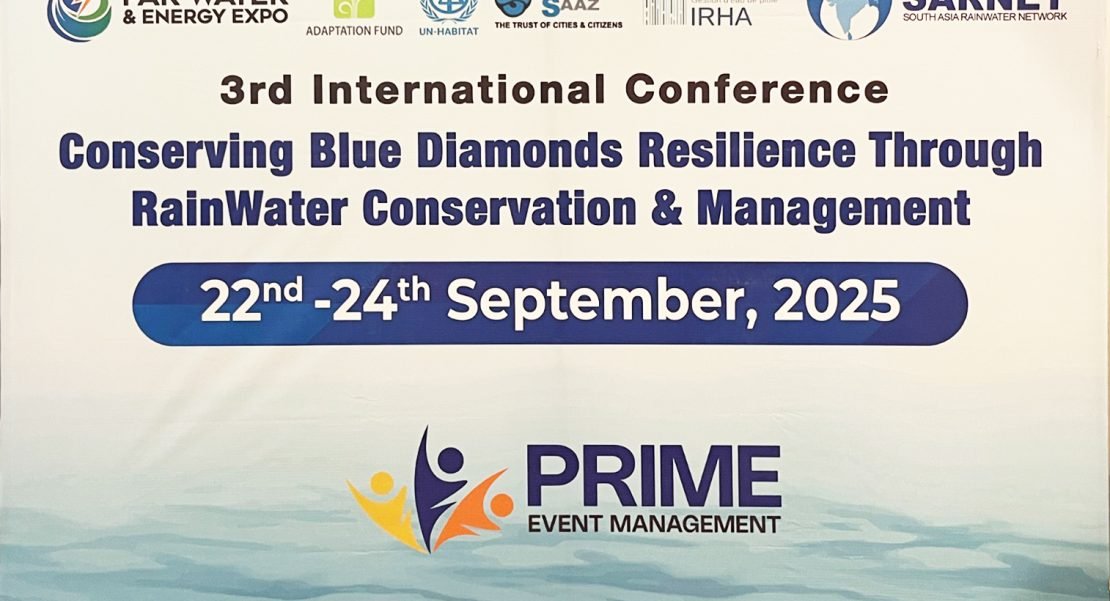
Shehersaaz proudly participated and was the conference partner at the South Asia Rainwater Network (SARNET) International Conference on Rainwater Harvesting 2025, held in Islamabad, bringing together global experts, policymakers, and practitioners to deliberate on sustainable water management and climate resilience.
The two-day conference, by SARNET in collaboration with Shehersaaz as their major Conference Partners, revolved around the theme “CONSERVING BLUE DIAMONDS Creating Climate Resilience Through Rainwater Conservation & Management”. The event provided a significant platform to exchange experiences and best practices from across South Asia, Central Africa, and the Middle East, focusing on both regional and global perspectives on rainwater conservation.
The inaugural session featured a keynote address by Mr. Han Heijnen, President IRHA, Switzerland, followed by country presentations from Sri Lanka, Nepal, Bangladesh, India, Bhutan, Iran, Malawi, Afghanistan, and Pakistan. Experts shared national case studies on traditional practices, innovative technologies, and policy frameworks that are reshaping rainwater harvesting approaches globally.
Representing Shehersaaz, Ms. Anahita Sajjad, Manager Communications and Networking, delivered an insightful presentation titled “Turning Rain into Resilience: Rain Harvesting to Climate Adaptation.” Her talk highlighted Shehersaaz’s ongoing initiatives to implement rainwater harvesting systems in urban and institutional settings, addressing urban flooding, water scarcity, and climate adaptation challenges. She emphasized the organization’s community-driven approach and the integration of nature-based solutions to promote water security across cities in Pakistan.
The conference also featured technical sessions led by UN agencies, I/NGOs, and academia, including discussions on groundwater recharge, rooftop rainwater systems, and youth-led innovations for water management. Delegates collectively called for greater regional collaboration, policy coherence, and capacity-building to mainstream rainwater harvesting into national development and climate strategies.
Concluding with remarks from the Chief Guest and a vote of thanks by Engr. Syed Zaheer Hussain Gardezi, the conference reaffirmed that rainwater harvesting is not merely a conservation practice—it is a pathway to resilience and sustainable urban futures.
Shehersaaz remains committed to advocating for climate-resilient cities and water-secure communities, turning every drop of rain into an opportunity for change.
Shehersaaz proudly participated and was the conference partner at the South Asia Rainwater Network (SARNET) International Conference on Rainwater Harvesting 2025, held in Islamabad, bringing together global experts, policymakers, and practitioners to deliberate on sustainable water management and climate resilience.
The two-day conference, by SARNET in collaboration with Shehersaaz as their major Conference Partners, revolved around the theme “CONSERVING BLUE DIAMONDS Creating Climate Resilience Through Rainwater Conservation & Management”. The event provided a significant platform to exchange experiences and best practices from across South Asia, Central Africa, and the Middle East, focusing on both regional and global perspectives on rainwater conservation.
The inaugural session featured a keynote address by Mr. Han Heijnen, President IRHA, Switzerland, followed by country presentations from Sri Lanka, Nepal, Bangladesh, India, Bhutan, Iran, Malawi, Afghanistan, and Pakistan. Experts shared national case studies on traditional practices, innovative technologies, and policy frameworks that are reshaping rainwater harvesting approaches globally.
Representing Shehersaaz, Ms. Anahita Sajjad, Manager Communications and Networking, delivered an insightful presentation titled “Turning Rain into Resilience: Rain Harvesting to Climate Adaptation.” Her talk highlighted Shehersaaz’s ongoing initiatives to implement rainwater harvesting systems in urban and institutional settings, addressing urban flooding, water scarcity, and climate adaptation challenges. She emphasized the organization’s community-driven approach and the integration of nature-based solutions to promote water security across cities in Pakistan.
The conference also featured technical sessions led by UN agencies, I/NGOs, and academia, including discussions on groundwater recharge, rooftop rainwater systems, and youth-led innovations for water management. Delegates collectively called for greater regional collaboration, policy coherence, and capacity-building to mainstream rainwater harvesting into national development and climate strategies.
Concluding with remarks from the Chief Guest and a vote of thanks by Engr. Syed Zaheer Hussain Gardezi, the conference reaffirmed that rainwater harvesting is not merely a conservation practice—it is a pathway to resilience and sustainable urban futures.
Shehersaaz remains committed to advocating for climate-resilient cities and water-secure communities, turning every drop of rain into an opportunity for change.
Shehersaaz Hosts PROGRESSIVE Dialogue & Demonstration at Ramada
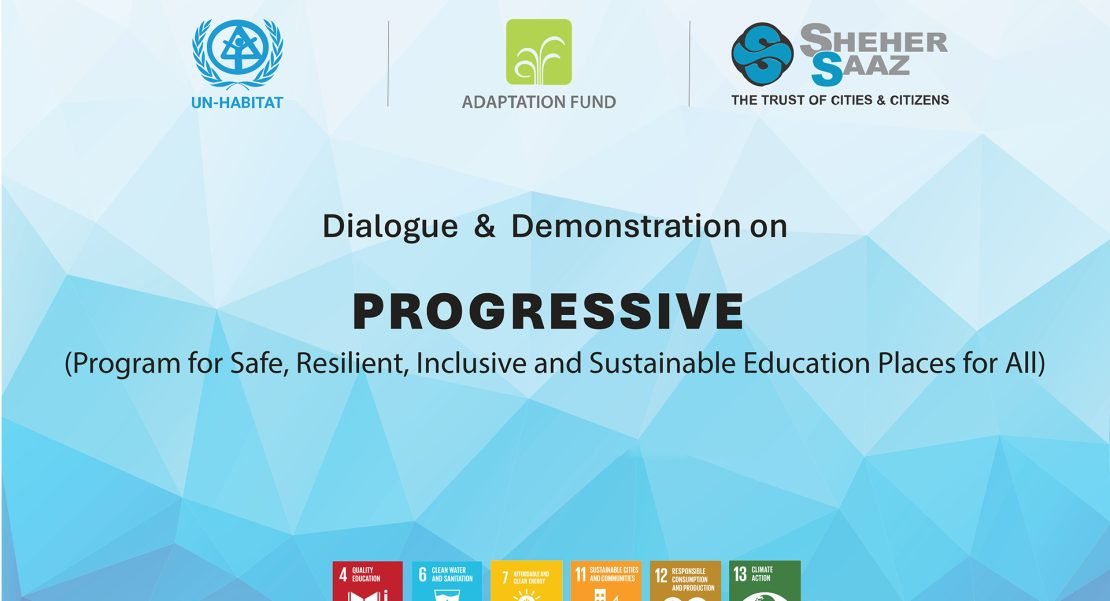
Islamabad, September 2, 2025 – Shehersaaz proudly organized a landmark event, a Dialogue and Demonstration under its flagship initiative PROGRESSIVE – Program for Safe, Resilient, Inclusive, and Sustainable Education Places for All at Ramada Hotel, Islamabad. The event brought together key stakeholders, education and safety experts, UN Agencies and development partners to reimagine schools as safe, climate-smart, child-friendly, and future-ready learning spaces.
Ms. Almas Shakoor, Executive Director Shehersaaz, welcomed the guests and emphasized that children’s safety, security, and health must always come first in schools. She noted that many past incidents continue to remind us of the urgent need for safer learning spaces, and highlighted that PROGRESSIVE is a step towards not only the well-being of children but the prosperity of society as a whole.
Mr. Jawed Ali Khan, Country Program Manager UN-Habitat, congratulated Shehersaaz on the impactful work being carried out under PROGRESSIVE. He highlighted that schools are hubs of change, and this change must be positive and productive. He stressed that unless schools are built to be safe, resilient, and inclusive, children will feel insecure and unsettled—directly affecting their ability to learn and grow.
The Dialogue & Demonstration featured an esteemed panel of speakers:
• Mr. Abdul Shakoor – Principal Architect behind PROGRESSIVE
• Mr. Bilal Aziz – Program Specialist Youth & Adult Literacy JICA
• Mr. Zafar Malik, Head of Education – UNESCO
• Dr. Afshan Huma – HOD Educational Planning, Policy studies and leadership AIOU
• Ms. Saima Bashir – Member Social Sector & Devolution, Ministry of Planning, Development & Special Initiatives
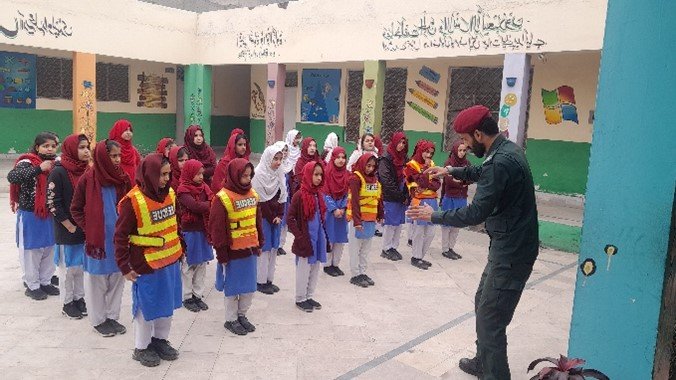
• Mr. Waqas – Emergency Officer Punjab Emergency Department Rescue 1122
Together, they stressed the urgent need for policy and framework implementation to ensure that children—society’s most vulnerable and sensitive members—learn in environments that protect, inspire, and empower them. Teachers, Students and Parents must work in close coordination when it comes to changing lives and personalities through education.
Founder’s Vision
Speaking at the panel, Mr. Abdul Shakoor, the man behind PROGRESSIVE, shared how the initiative was born:
“For me, every place where learning happens is a school — whether it’s a government primary school, a college, or a university. That is why, in PROGRESSIVE, we do not differentiate between institutions. Every educational space must be safe, inclusive, resilient, and sustainable.”
He explained that PROGRESSIVE was inspired by Shehersaaz’s two decades of work with children and young people in sustainable development, disaster risk reduction, and climate adaptation.
“Schools are not just buildings — they are centers of progressive change in society. Whatever children learn here, they take back to their homes and communities. If they experience safety, inclusivity, and resilience in schools, they will build the same in society,” he added.
Mr. Shakoor stressed that the initiative is rooted in participatory planning and design, working with students, parents, teachers, and authorities, while aligning with global frameworks like the SDGs, the Paris Agreement, the Sendai Framework, and the New Urban Agenda.
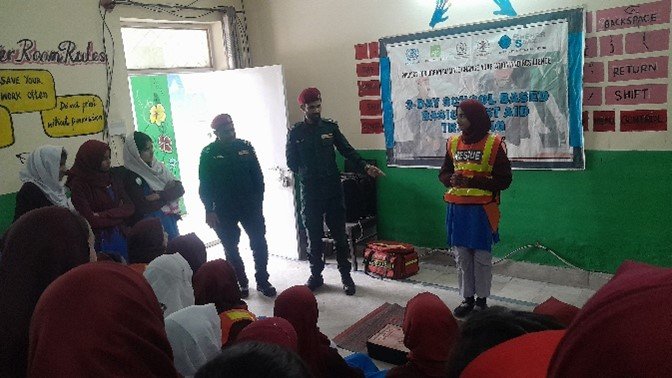
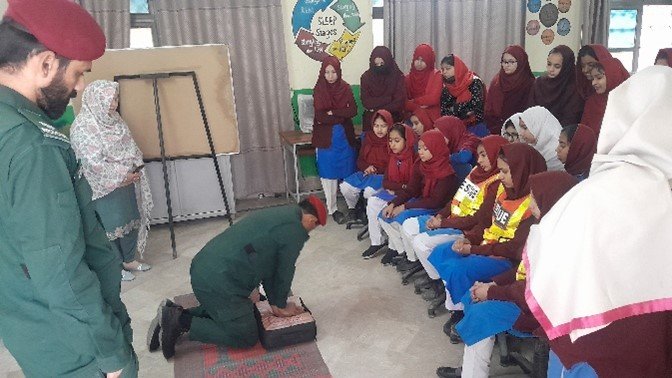
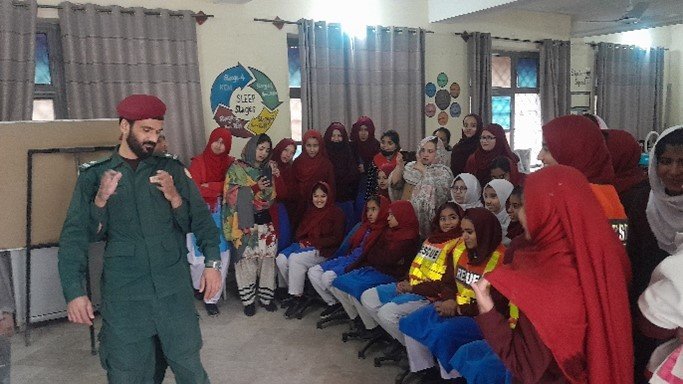
During the panel discussion, Mr. Zafar from UNESCO raised the critical issue of “learning poverty”, highlighting that while children are attending school, their learning outcomes remain poor — with many 4th graders unable to solve basic mathematics. He emphasized the need for attitudinal and behavioral changes alongside academic reforms. Mr. Bilal Aziz from JICA suggested that in continuation of the impactful work being done under PROGRESSIVE we must expand beyond schools into community-based and non-formal learning models, engaging students, parents, and communities. He shared that similar models in Bangladesh, Japan, Indonesia, and the Philippines have proven successful. Mr. Waqas from Rescue 1122 highlighted their School Safety Program, which includes first aid training through the Pakistan Life Saver Program, Rescue Scout Corps, and CADRE, aimed at equipping children and communities with lifesaving skills during disasters. As opened by Dr. Afshan Huma from AIOU, she said that Healthy environment takes us towards a healthy adulthood and children must be dealt with care and their mental and emotional wellbeing must be the first priority for every child. Dr. Saima Bashir from the Ministry of Planning, Development & Special Initiatives highlighted the government’s National Economic Transformation Plan (2024–29) — a five-year roadmap aimed at achieving sustainable economic prosperity and steering Pakistan towards a trillion-dollar economy by 2035. The plan focuses on five key pillars, the 5Es: Exports, E-Pakistan, Environment, Energy, and Equity, designed to drive export-led growth, digital transformation, and inclusive development. She also noted that the ministry is currently reviewing several school projects to ensure that safety and security remain top priorities in the education sector.
The central message was clear: schools must be more than just buildings. They must be happy, safe, resilient and inclusive spaces where children are motivated to attend with passion, eager to learn, interact, and grow.
Event Highlights
• Interactive Engagement: Dr. Afshan Huma energized the audience with a fun physical activity, explaining that a 40-minute active learning cycle mirrors a child’s natural attention span, making learning more engaging and effective.
• Student Demonstration: Students from Govt. New Islamia Model School, Carriage Factory, Rawalpindi, impressed the audience with a practical First-Aid demonstration, showcasing the importance of equipping children with life-saving skills.
• Celebrating Dedication: Certificates of Appreciation were awarded to Shehersaaz engineers for their tireless efforts in building safe spaces, and to vendors who provided sustainable materials, ensuring that climate-friendly practices remain at the heart of PROGRESSIVE.
• Meet Droppy 💧: The event also unveiled “Droppy the Water Droplet”, Shehersaaz’s cheerful new mascot who reminds us that water is life and must be conserved for our children’s future.
A Milestone for Pakistan’s Children
This event marks an important milestone in Shehersaaz’s journey of shaping inclusive, safe, resilient, and sustainable schools across Pakistan. With PROGRESSIVE, we reaffirm our commitment to making every classroom a place of hope, safety, resilience and empowerment—where children not only study, but build positive and confident personalities.
Ms. Almas Shakoor, Executive Director Shehersaaz, welcomed the guests and emphasized that children’s safety, security, and health must always come first in schools. She noted that many past incidents continue to remind us of the urgent need for safer learning spaces, and highlighted that PROGRESSIVE is a step towards not only the well-being of children but the prosperity of society as a whole.
Mr. Jawed Ali Khan, Country Program Manager UN-Habitat, congratulated Shehersaaz on the impactful work being carried out under PROGRESSIVE. He highlighted that schools are hubs of change, and this change must be positive and productive. He stressed that unless schools are built to be safe, resilient, and inclusive, children will feel insecure and unsettled—directly affecting their ability to learn and grow.
The Dialogue & Demonstration featured an esteemed panel of speakers:
• Mr. Abdul Shakoor – Principal Architect behind PROGRESSIVE
• Mr. Bilal Aziz – Program Specialist Youth & Adult Literacy JICA
• Mr. Zafar Malik, Head of Education – UNESCO
• Dr. Afshan Huma – HOD Educational Planning, Policy studies and leadership AIOU
• Ms. Saima Bashir – Member Social Sector & Devolution, Ministry of Planning, Development & Special Initiatives
• Mr. Waqas – Emergency Officer Punjab Emergency Department Rescue 1122
Together, they stressed the urgent need for policy and framework implementation to ensure that children—society’s most vulnerable and sensitive members—learn in environments that protect, inspire, and empower them. Teachers, Students and Parents must work in close coordination when it comes to changing lives and personalities through education.
Founder’s Vision
Speaking at the panel, Mr. Abdul Shakoor, the man behind PROGRESSIVE, shared how the initiative was born:
“For me, every place where learning happens is a school — whether it’s a government primary school, a college, or a university. That is why, in PROGRESSIVE, we do not differentiate between institutions. Every educational space must be safe, inclusive, resilient, and sustainable.”
He explained that PROGRESSIVE was inspired by Shehersaaz’s two decades of work with children and young people in sustainable development, disaster risk reduction, and climate adaptation.
“Schools are not just buildings — they are centers of progressive change in society. Whatever children learn here, they take back to their homes and communities. If they experience safety, inclusivity, and resilience in schools, they will build the same in society,” he added.
Mr. Shakoor stressed that the initiative is rooted in participatory planning and design, working with students, parents, teachers, and authorities, while aligning with global frameworks like the SDGs, the Paris Agreement, the Sendai Framework, and the New Urban Agenda.
During the panel discussion, Mr. Zafar from UNESCO raised the critical issue of “learning poverty”, highlighting that while children are attending school, their learning outcomes remain poor — with many 4th graders unable to solve basic mathematics. He emphasized the need for attitudinal and behavioral changes alongside academic reforms. Mr. Bilal Aziz from JICA suggested that in continuation of the impactful work being done under PROGRESSIVE we must expand beyond schools into community-based and non-formal learning models, engaging students, parents, and communities. He shared that similar models in Bangladesh, Japan, Indonesia, and the Philippines have proven successful. Mr. Waqas from Rescue 1122 highlighted their School Safety Program, which includes first aid training through the Pakistan Life Saver Program, Rescue Scout Corps, and CADRE, aimed at equipping children and communities with lifesaving skills during disasters. As opened by Dr. Afshan Huma from AIOU, she said that Healthy environment takes us towards a healthy adulthood and children must be dealt with care and their mental and emotional wellbeing must be the first priority for every child. Dr. Saima Bashir from the Ministry of Planning, Development & Special Initiatives highlighted the government’s National Economic Transformation Plan (2024–29) — a five-year roadmap aimed at achieving sustainable economic prosperity and steering Pakistan towards a trillion-dollar economy by 2035. The plan focuses on five key pillars, the 5Es: Exports, E-Pakistan, Environment, Energy, and Equity, designed to drive export-led growth, digital transformation, and inclusive development. She also noted that the ministry is currently reviewing several school projects to ensure that safety and security remain top priorities in the education sector.
The central message was clear: schools must be more than just buildings. They must be happy, safe, resilient and inclusive spaces where children are motivated to attend with passion, eager to learn, interact, and grow.
Event Highlights
• Interactive Engagement: Dr. Afshan Huma energized the audience with a fun physical activity, explaining that a 40-minute active learning cycle mirrors a child’s natural attention span, making learning more engaging and effective.
• Student Demonstration: Students from Govt. New Islamia Model School, Carriage Factory, Rawalpindi, impressed the audience with a practical First-Aid demonstration, showcasing the importance of equipping children with life-saving skills.
• Celebrating Dedication: Certificates of Appreciation were awarded to Shehersaaz engineers for their tireless efforts in building safe spaces, and to vendors who provided sustainable materials, ensuring that climate-friendly practices remain at the heart of PROGRESSIVE.
• Meet Droppy 💧: The event also unveiled “Droppy the Water Droplet”, Shehersaaz’s cheerful new mascot who reminds us that water is life and must be conserved for our children’s future.
A Milestone for Pakistan’s Children
This event marks an important milestone in Shehersaaz’s journey of shaping inclusive, safe, resilient, and sustainable schools across Pakistan. With PROGRESSIVE, we reaffirm our commitment to making every classroom a place of hope, safety, resilience and empowerment—where children not only study, but build positive and confident personalities.