
Shehersaaz and PIDE Call for Climate-Responsive, Affordable Housing in Pakistan
Fourth Urban Thinkers Campus dialogue brings experts together to explore resilient housing solutions rooted in Pakistan’s climate and local context
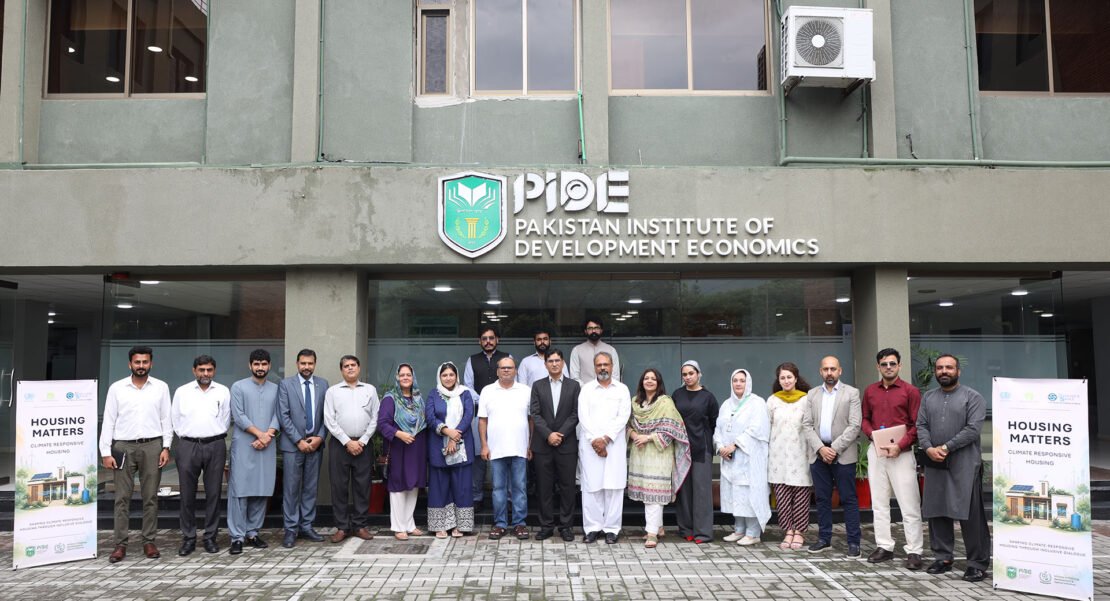
ISLAMABAD, 20 August 2026: Shehersaaz, in collaboration with the Pakistan Institute of Development Economics (PIDE), convened the fourth dialogue under its Urban Thinkers Campus (UTC) series, “Housing Matters: Climate-Responsive Housing,” bringing together leading voices from urban planning, architecture, academia, policy, research and local governance to discuss the future of housing in Pakistan.
Held at PIDE in Islamabad, the dialogue examined how Pakistan can move towards housing solutions that are not only affordable and inclusive, but also resilient to a rapidly changing climate.
With rising temperatures, extreme weather events, flooding, water stress and increasing construction and land costs placing growing pressure on urban communities, participants emphasized the urgent need to rethink conventional approaches to housing and urban development.
From Climate-Responsive Buildings to Resilient Neighbourhoods
Discussions highlighted that climate resilience must extend beyond individual buildings. Participants stressed the need for a neighbourhood-scale approach that integrates housing with effective drainage, climate-resilient infrastructure, public spaces, local development planning and stronger municipal systems.
The dialogue also explored the potential of passive design strategies and indigenous architectural practices to address contemporary climate challenges. Features such as courtyards, shaded verandas, natural ventilation, orientation and the use of locally available materials were highlighted as practical approaches that can improve thermal comfort and reduce dependence on energy-intensive cooling.
At the same time, participants examined the growing affordability crisis in housing, particularly in the context of escalating land and construction costs. The discussion called for approaches that balance climate resilience, affordability, accessibility and quality, ensuring that sustainable housing does not remain limited to those who can afford it.
Bridging Research, Policy and Practice
A recurring theme throughout the dialogue was the need to bridge the gap between research, policy and implementation. Participants highlighted the importance of strengthening local government capacities and creating meaningful opportunities for communities to participate in decisions that shape their neighbourhoods.
The dialogue also explored how successful pilot interventions can be translated into scalable policies and programmes, enabling climate-responsive solutions to move beyond individual projects and contribute to broader urban transformation.
The fourth Housing Matters dialogue reinforces Shehersaaz’s commitment to creating platforms that bring diverse urban stakeholders together to exchange knowledge, challenge conventional approaches and identify actionable pathways towards more resilient cities.
Through the dialogue series, Shehersaaz continues to promote conversations that connect evidence, policy and practice, with the aim of supporting inclusive and sustainable urban development in Pakistan.
As the country faces an increasingly climate-uncertain future, the dialogue underscored a fundamental principle: housing must do more than provide shelter. It must protect people from climate risks, remain within their means, strengthen communities and respond to the environmental and cultural realities of the places they call home.
ISLAMABAD, 20 August 2026: Shehersaaz, in collaboration with the Pakistan Institute of Development Economics (PIDE), convened the fourth dialogue under its Urban Thinkers Campus (UTC) series, “Housing Matters: Climate-Responsive Housing,” bringing together leading voices from urban planning, architecture, academia, policy, research and local governance to discuss the future of housing in Pakistan.
Held at PIDE in Islamabad, the dialogue examined how Pakistan can move towards housing solutions that are not only affordable and inclusive, but also resilient to a rapidly changing climate.
With rising temperatures, extreme weather events, flooding, water stress and increasing construction and land costs placing growing pressure on urban communities, participants emphasized the urgent need to rethink conventional approaches to housing and urban development.
From Climate-Responsive Buildings to Resilient Neighbourhoods
Discussions highlighted that climate resilience must extend beyond individual buildings. Participants stressed the need for a neighbourhood-scale approach that integrates housing with effective drainage, climate-resilient infrastructure, public spaces, local development planning and stronger municipal systems.
The dialogue also explored the potential of passive design strategies and indigenous architectural practices to address contemporary climate challenges. Features such as courtyards, shaded verandas, natural ventilation, orientation and the use of locally available materials were highlighted as practical approaches that can improve thermal comfort and reduce dependence on energy-intensive cooling.
At the same time, participants examined the growing affordability crisis in housing, particularly in the context of escalating land and construction costs. The discussion called for approaches that balance climate resilience, affordability, accessibility and quality, ensuring that sustainable housing does not remain limited to those who can afford it.
Bridging Research, Policy and Practice
A recurring theme throughout the dialogue was the need to bridge the gap between research, policy and implementation. Participants highlighted the importance of strengthening local government capacities and creating meaningful opportunities for communities to participate in decisions that shape their neighbourhoods.
The dialogue also explored how successful pilot interventions can be translated into scalable policies and programmes, enabling climate-responsive solutions to move beyond individual projects and contribute to broader urban transformation.
The fourth Housing Matters dialogue reinforces Shehersaaz’s commitment to creating platforms that bring diverse urban stakeholders together to exchange knowledge, challenge conventional approaches and identify actionable pathways towards more resilient cities.
Through the dialogue series, Shehersaaz continues to promote conversations that connect evidence, policy and practice, with the aim of supporting inclusive and sustainable urban development in Pakistan.
As the country faces an increasingly climate-uncertain future, the dialogue underscored a fundamental principle: housing must do more than provide shelter. It must protect people from climate risks, remain within their means, strengthen communities and respond to the environmental and cultural realities of the places they call home.